70+ Skin Health Assessment Tool
How's Your Skin Care Routine?
Answer these quick questions to get personalized recommendations for your 70+ skin care
At 70, your skin isn’t broken-it’s just changed. The same routines that worked in your 40s or 50s don’t cut it anymore. Collagen drops by 1% every year after 30. By 70, you’ve lost nearly half of it. Your skin gets thinner, drier, and slower to heal. But you don’t need expensive creams or chemical peels. The best treatments for 70-year-old skin are simple, natural, and backed by real results.
Hydration Is Non-Negotiable
Older skin doesn’t hold water like it used to. The natural oils (sebum) your skin produces drop by 60% after 60. That’s why your skin feels tight, flaky, or even itchy. The fix? Moisture, not just surface cream.
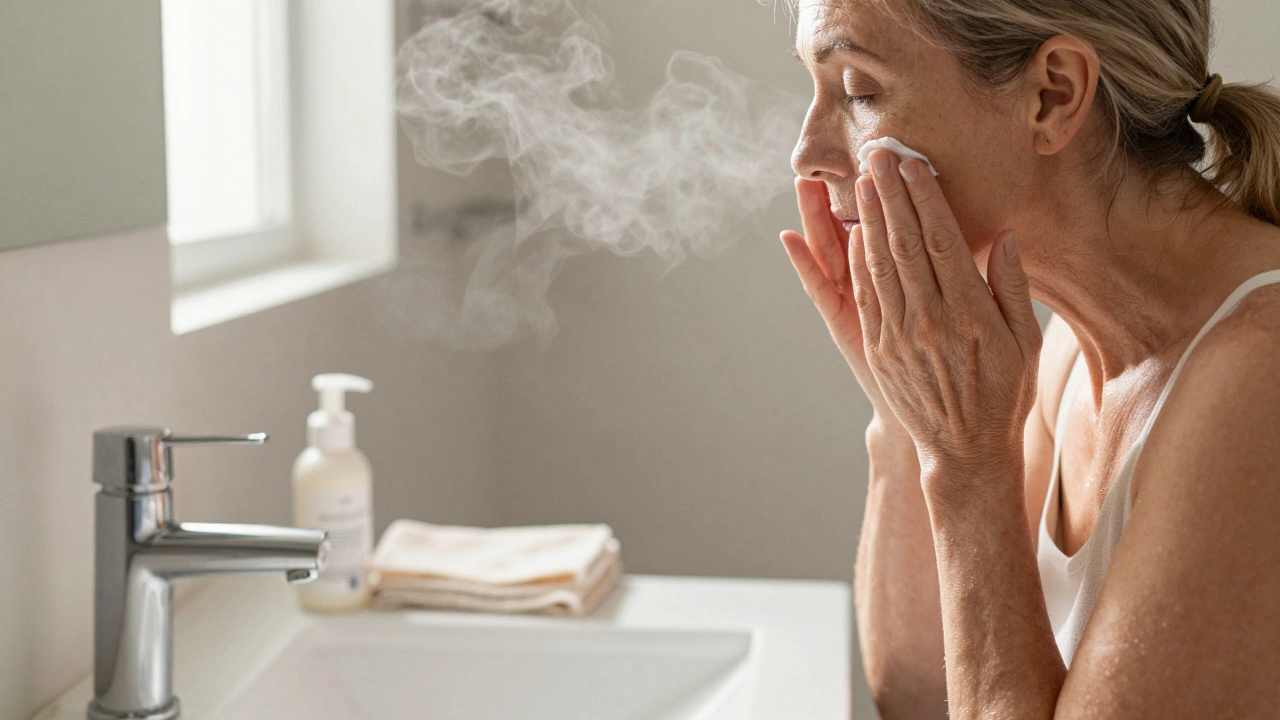
Start with a gentle, fragrance-free cleanser. Harsh soaps strip what little oil you have left. Wash with lukewarm water-hot water dries you out faster. Then, apply moisturizer within 60 seconds of getting out of the shower. This locks in water while your skin is still damp.
Look for ingredients like ceramides, hyaluronic acid, and squalane. These aren’t fancy chemicals. Ceramides are lipids your skin naturally makes. Hyaluronic acid holds up to 1,000 times its weight in water. Squalane comes from olives. You can find all three in affordable, drugstore brands like CeraVe or Vanicream.
Apply moisturizer twice a day. Don’t skip nighttime. Your skin repairs itself while you sleep. If you’re using a retinoid (even a low-dose one), always follow it with moisturizer. It reduces irritation and helps your skin tolerate it better.
Protect Your Skin Daily-Even When It’s Cloudy
UV damage is the #1 cause of visible aging. By 70, most of your sun damage is already done. But you still have to stop more from happening. One study from the Journal of the American Academy of Dermatology found that daily sunscreen use after age 60 reduced new wrinkles by 24% over four years.
You don’t need SPF 100. SPF 30 is enough if you apply it right. Use about half a teaspoon for your face and neck. Reapply every two hours if you’re outside. Don’t forget your ears, scalp (if you have thinning hair), and hands. These areas show aging fastest.
Mineral sunscreens with zinc oxide or titanium dioxide are ideal. They sit on top of the skin instead of sinking in. That means less irritation for sensitive, older skin. Look for formulas labeled "for sensitive skin" or "non-comedogenic." You can find them at any pharmacy.
Food Matters More Than You Think
What you eat shows up on your skin. A 2023 study from the University of Auckland tracked 400 people over 70 and found those who ate more omega-3s, vitamin C, and zinc had significantly fewer dry patches and better skin elasticity.
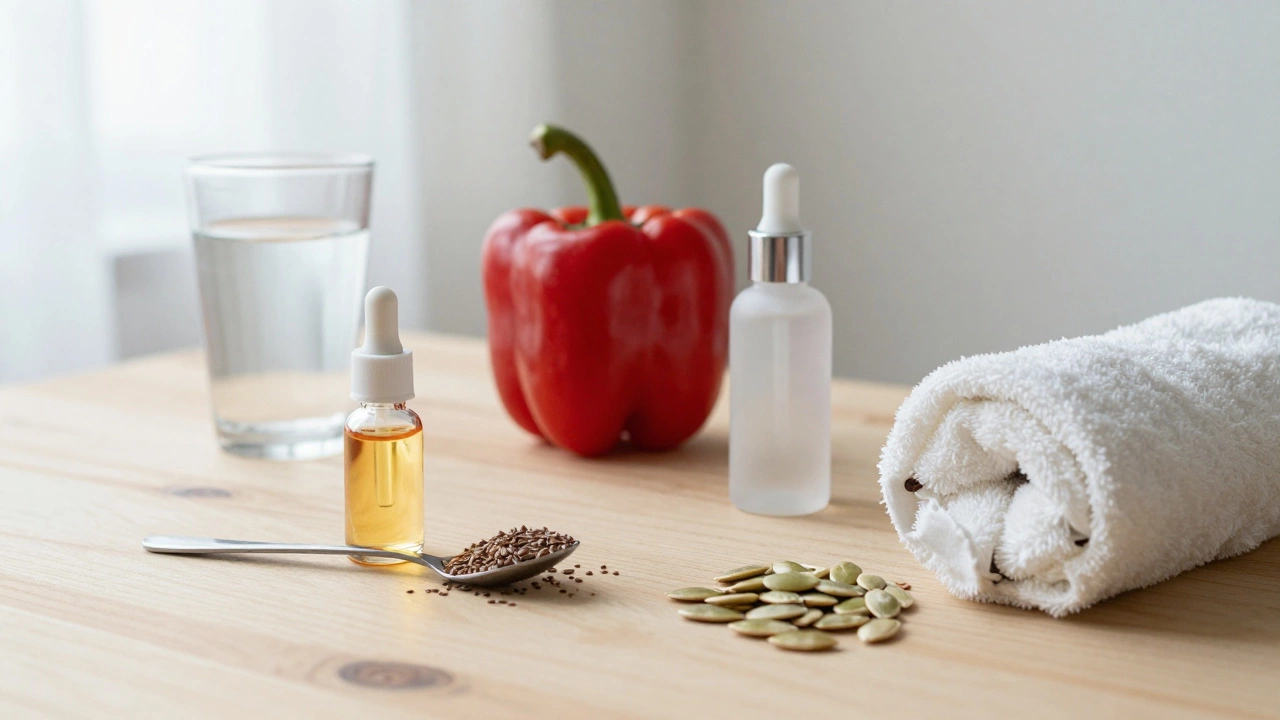
Omega-3s: Eat fatty fish like salmon, sardines, or mackerel twice a week. If you don’t eat fish, try flaxseeds, chia seeds, or walnuts. A tablespoon of ground flaxseed in your oatmeal gives you a solid dose.
Vitamin C: It helps make collagen. Citrus fruits are good, but bell peppers have more. One red bell pepper has 150mg of vitamin C-more than an orange. Add them to salads, stir-fries, or roast them with olive oil.
Zinc: Your skin needs zinc to heal. Oysters have the most, but if that’s not your thing, try pumpkin seeds, lentils, or chickpeas. A handful of roasted pumpkin seeds as a snack gives you 2mg of zinc-about half your daily need.
Drink water. Not fancy detox teas. Just plain water. Aim for 1.5 to 2 liters a day. If you’re on diuretics for blood pressure, talk to your doctor about balancing fluid intake.

Don’t Ignore Gentle Movement
Skin isn’t just a surface. It’s connected to your blood flow. When you move, your heart pumps more blood to your skin. That brings oxygen and nutrients. It also helps remove waste.
You don’t need to run marathons. A 20-minute walk three times a week makes a difference. Walking boosts circulation to the face and hands-two areas that show aging quickly. Yoga or tai chi also help. They improve balance and reduce stress, which lowers cortisol. High cortisol breaks down collagen.
If you sit most of the day, try this: every hour, stand up and stretch for 90 seconds. Reach your arms overhead. Roll your shoulders. Wiggle your toes. It sounds small, but it keeps your skin fed with fresh blood.
Stop Using These Things
Some "anti-aging" products actually make things worse. Here’s what to ditch:
- Alcohol-based toners - They dry out thin skin and cause redness.
- Physical scrubs with walnut shells or sugar - Tiny jagged particles tear fragile skin. Use a soft washcloth instead.
- Strong retinoids (tretinoin 0.1% or higher) - Too harsh for many 70-year-olds. Start with 0.025% if you want to try retinol.
- Essential oils neat on skin - Lavender, tea tree, citrus oils can burn or irritate aging skin. If you use them, dilute them in a carrier oil like jojoba or almond oil.
Also, avoid hot baths. They strip natural oils. Stick to short, warm showers. And skip the loofah. Use your hands or a soft sponge.
What About Natural Oils?
Jojoba oil, rosehip oil, and argan oil are popular. But not all work the same.
Jojoba oil is closest to your skin’s natural sebum. It’s non-comedogenic and absorbs well. Apply a few drops after moisturizer or mix it into your cream.
Rosehip oil has vitamin A and essential fatty acids. It’s good for fading age spots. But it can stain light skin temporarily. Patch test first.
Argan oil is rich in vitamin E. It’s great for dry hands and elbows. But it’s pricey. You don’t need to buy organic or "cold-pressed" versions to get results. Stick to basics.
Never use coconut oil as a moisturizer. It clogs pores and can cause breakouts, even in older skin. It’s not "natural"-it’s just greasy.
When to See a Dermatologist
Natural care helps, but some things need a doctor. See a dermatologist if:
- A mole changes shape, color, or grows bigger
- You have sores that don’t heal in 3 weeks
- Your skin itches constantly and doesn’t improve with moisturizer
- You notice new purple or red patches that don’t fade
These could be signs of skin cancer, infection, or a reaction to medication. Older adults are at higher risk. A quick check-up every year is smart.
Real Results, Not Hype
There’s no magic potion. No serum that turns back time. But consistent, simple care works. People over 70 who follow these steps notice:
- Less flakiness and tightness
- Fewer dry patches on arms and legs
- Softer, more even skin tone
- Less sensitivity to weather changes
It takes 4 to 6 weeks to see changes. Be patient. Your skin has been through decades. It doesn’t need a revolution. It needs routine, care, and time.
Start with one thing: moisturize after every shower. Then add sunscreen. Then adjust your diet. You don’t need to do it all today. Just do it tomorrow. And the next day. That’s how healthy skin at 70 is built.
Can I use honey as a natural face mask for 70-year-old skin?
Raw honey has mild antibacterial and humectant properties, meaning it can help draw in moisture. For 70-year-old skin, it’s generally safe as a weekly mask-just make sure it’s pure, unpasteurized honey. Apply a thin layer, leave it on for 10 minutes, then rinse with lukewarm water. Don’t use it daily-it can be sticky and attract dirt. Also, avoid if you’re allergic to bees. It won’t reverse wrinkles, but it can give a temporary glow.
Is vitamin E oil good for aging skin?
Vitamin E is an antioxidant that helps protect skin from free radicals. Topical vitamin E oil can help reduce dryness and support skin barrier function. But it’s not a miracle worker. Studies show it works best when paired with vitamin C. You can puncture a vitamin E capsule and mix a drop into your moisturizer. Don’t apply it straight-it’s thick and can feel greasy. It’s safe for most people, but patch test first.
Do I need to change my skincare routine every season?
Yes, especially in places with cold winters or dry summers. In winter, switch to thicker creams. In summer, use lighter lotions and increase sunscreen use. Humidity levels drop in winter, so your skin loses moisture faster. If you notice more flaking or tightness when the weather changes, adjust your moisturizer’s texture. A cream in winter, a lotion in summer. That’s it.
Can drinking green tea improve my skin?
Green tea contains polyphenols, which are antioxidants that help reduce inflammation and may protect against UV damage. Drinking 1-2 cups a day can support skin health from the inside. But it won’t replace topical moisturizers or sunscreen. Avoid adding sugar or milk-they can negate some benefits. Brew it weak, let it cool, and sip slowly. It’s a gentle habit, not a treatment.
Why does my skin itch more as I get older?
Itchy skin at 70 is usually dryness, not allergies. Your skin produces less oil, and your nerve endings become more sensitive. Harsh soaps, hot showers, and low humidity make it worse. If moisturizing twice daily doesn’t help, talk to your doctor. It could be a side effect of medication (like diuretics or statins) or a condition like eczema or psoriasis. Don’t scratch-it breaks the skin and leads to infection. Use a cool compress or fragrance-free anti-itch cream if needed.