Personalized Skincare Routine Builder
Recommended Routine
Select your skin type and goal to generate your personalized routine.
Quick Guide to Glowing Skin
- Consistency over intensity: A simple routine used daily beats a harsh treatment used once a week.
- Protect the barrier: Never strip your skin to the point of redness; a healthy barrier is the secret to a glow.
- Hydration is non-negotiable: Even oily skin needs water-based moisture to prevent overproducing sebum.
- Sunscreen is a must: Without UV protection, all your other skincare efforts are basically wasted.
The Foundation: Understanding Your Skin Barrier
Before you start buying products, you need to know what you're actually treating. Your skin has a protective outer layer called the Skin Barrier is the lipid-rich layer of the stratum corneum that keeps moisture in and irritants out. When this barrier is damaged, you get redness, breakouts, and that tight, itchy feeling. Many people try to "scrub away" acne, but they end up damaging this barrier, which actually makes breakouts worse because bacteria can enter the skin more easily.
Think of your barrier like a brick wall. The skin cells are the bricks, and the lipids (ceramides, cholesterol, and fatty acids) are the mortar. If the mortar is crumbling, the wall collapses. To get clear skin, you first have to stop the damage. Avoid using high-percentage acids every single day or washing your face with boiling hot water, which strips away those essential lipids.
Building a Routine That Actually Works
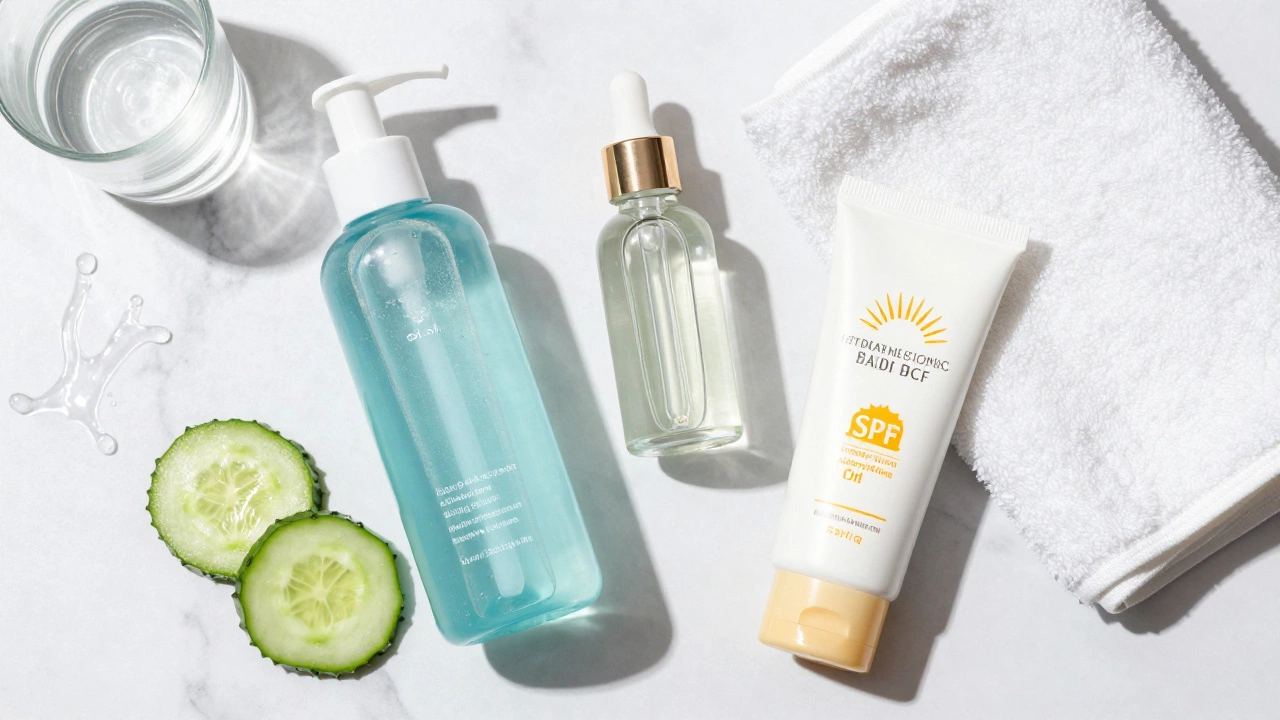
You don't need a bathroom full of bottles. A streamlined approach prevents irritation and makes it easier to identify what's actually working. Start with these three pillars: cleansing, hydrating, and protecting.
First, the cleanser. Avoid harsh soaps that leave your face feeling "squeaky clean." That feeling is actually a sign that you've stripped your natural oils. Instead, look for a Gentle Cleanser is a soap-free washing agent designed to remove impurities without disrupting the skin's pH balance. If you wear heavy makeup or waterproof sunscreen, try double cleansing: use an oil-based cleanser first to melt away grime, followed by a water-based one to clean the skin.
Next, focus on hydration. There is a massive difference between dry skin (lack of oil) and dehydrated skin (lack of water). To fix this, use a Humectant is a substance, like hyaluronic acid or glycerin, that attracts and holds water molecules in the skin. Apply these to damp skin to lock in the moisture. Follow this with a moisturizer containing ceramides to seal everything in.
Finally, the non-negotiable: Sunscreen is a topical product that protects the skin from ultraviolet (UV) radiation, preventing premature aging and hyperpigmentation. UV rays break down collagen and darken acne scars (post-inflammatory hyperpigmentation). If you're using active ingredients like retinol or AHAs, your skin becomes more sensitive to the sun. Skipping SPF during this process is like trying to fill a bucket with a hole in the bottom.
| Goal | Recommended Entity | How it Works | Best Time to Use |
|---|---|---|---|
| Clogged Pores | Salicylic Acid (BHA) | Oil-soluble; penetrates deep into pores to dissolve debris | Evening |
| Dullness/Texture | Glycolic Acid (AHA) | Water-soluble; exfoliates the surface layer of dead skin | Evening |
| Fine Lines/Acne | Retinoids | Increases cell turnover and boosts collagen production | Evening Only |
| Brightening | Vitamin C | Neutralizes free radicals and inhibits melanin production | Morning |
Dealing with Breakouts: The Science of Clearing Acne
If you're fighting active acne, you need to understand that not all pimples are the same. Comedonal acne (whiteheads and blackheads) is usually a result of trapped oil and dead skin. For this, Salicylic Acid is a beta-hydroxy acid (BHA) that exfoliates inside the pore to clear blockages is your best friend. Because it's oil-soluble, it can cut through the sebum that traps bacteria.
Then there's inflammatory acne-the red, painful bumps. These are often caused by C. acnes is the primary bacterium responsible for the inflammation associated with acne vulgaris. While you can't kill all bacteria on your skin, you can manage the inflammation. Using Benzoyl Peroxide helps by introducing oxygen into the pore, which kills the anaerobic bacteria. But be careful: it can be incredibly drying. Start with a 2.5% concentration instead of jumping straight to 10%.
For those dealing with hormonal acne-usually appearing along the jawline and chin-topical creams only go so far. This is often driven by Androgens is hormones that stimulate the sebaceous glands to produce more oil. In these cases, managing stress and diet (specifically reducing high-glycemic foods that spike insulin) can be more effective than adding another acid to your routine.
The Role of Diet and Lifestyle
You can't put a luxury cream on a bad diet and expect a miracle. While skincare products handle the surface, your internal health dictates the quality of the cells your body produces. One of the biggest culprits for skin inflammation is sugar. High sugar intake leads to a process called glycation, where sugar molecules attach to collagen fibers, making them stiff and brittle. This leads to premature aging and can trigger breakouts.
Hydration isn't just about drinking water, though. It's about electrolytes. If you drink a gallon of water but don't have enough minerals, the water just passes through you. Adding a pinch of sea salt or eating potassium-rich foods like avocados helps that water actually reach your skin cells. Also, pay attention to your pillowcases. Cotton absorbs bacteria and oils; switching to a silk or satin pillowcase reduces friction and keeps your face cleaner throughout the night.

Advanced Tips for the "Glass Skin" Look
Once your skin is clear and your barrier is healthy, you can move toward the "glass skin" aesthetic-where the skin looks so hydrated it's almost translucent. The secret here is layering. Instead of one thick layer of cream, use multiple thin layers of hydrating products.
Start with a hydrating toner, then a serum with Niacinamide is a form of vitamin B3 that regulates oil production and improves skin elasticity. Niacinamide is a powerhouse because it's gentle enough for almost everyone and helps shrink the appearance of pores while brightening the skin tone. Finish with a lightweight moisturizer and a touch of facial oil if you have dry skin.
Another pro tip is the "sandwich method" for retinoids. If you're using a strong Retinol is a derivative of Vitamin A that speeds up cell turnover and reduces the appearance of wrinkles, apply a thin layer of moisturizer first, then the retinol, and then another layer of moisturizer. This reduces the risk of peeling and irritation without significantly compromising the effectiveness of the ingredient.
How long does it take to see results from a new skincare routine?
Skin cells typically take about 28 to 40 days to turn over. This means you won't see the real impact of a new product for at least a month. For active ingredients like retinoids or AHAs, it can take 8 to 12 weeks to see a significant change in texture and acne. Patience is the most important part of the process; switching products every week only irritates the skin and prevents you from knowing what actually works.
Can I use Vitamin C and Retinol at the same time?
It is generally not recommended to apply them at the same time because they require different pH levels to be effective. Vitamin C is an antioxidant that works best in the morning to protect against UV damage. Retinol is a cell-communicating ingredient that is degraded by sunlight and can cause irritation if mixed with acids. The gold standard is: Vitamin C in the morning and Retinol in the evening.
What is the difference between physical and chemical exfoliation?
Physical exfoliation involves using a scrub, brush, or cloth to manually remove dead skin cells. This can be too aggressive and cause micro-tears in the skin. Chemical exfoliation uses acids (like AHAs and BHAs) to dissolve the "glue" holding dead skin cells together. Chemical exfoliation is generally safer and more effective because it provides a more even result and can penetrate deeper into the pores.
Do I really need a separate eye cream?
Not necessarily. Most eye creams are just more expensive, gentler versions of your regular moisturizer. If your face moisturizer doesn't contain harsh actives (like high-strength acids) and doesn't irritate your eyes, you can just use that. However, if you have specific concerns like deep dark circles or puffiness, an eye cream with caffeine or peptides may provide targeted benefits that a general moisturizer doesn't.
Is oily skin still supposed to use moisturizer?
Yes, absolutely. When oily skin is deprived of moisture, it can actually produce *more* oil to compensate for the dehydration. The key is choosing the right formula. Instead of heavy creams, look for oil-free, gel-based moisturizers or "water creams." These provide the necessary hydration without adding a greasy layer to your skin.
Next Steps for Your Skin Journey
If you're just starting out, don't buy everything at once. Introduce one new product every two weeks. This way, if you have a reaction, you'll know exactly which product caused it. Start with a basic cleanser, moisturizer, and SPF. Once those are integrated into your life, you can add a targeted treatment like a BHA for pores or Vitamin C for glow.
If you're dealing with severe cystic acne that doesn't respond to over-the-counter treatments, your next step should be a consultation with a dermatologist. Some conditions, like rosacea or fungal acne, require prescription-strength medication that a store-bought serum simply cannot provide. Remember, the goal is healthy skin, not perfect skin-pores are normal, and an occasional breakout is just a part of being human.