
Prescription Savings Estimator
Enter Your Details
Comparison Results
Enter values above to see how much you can save.
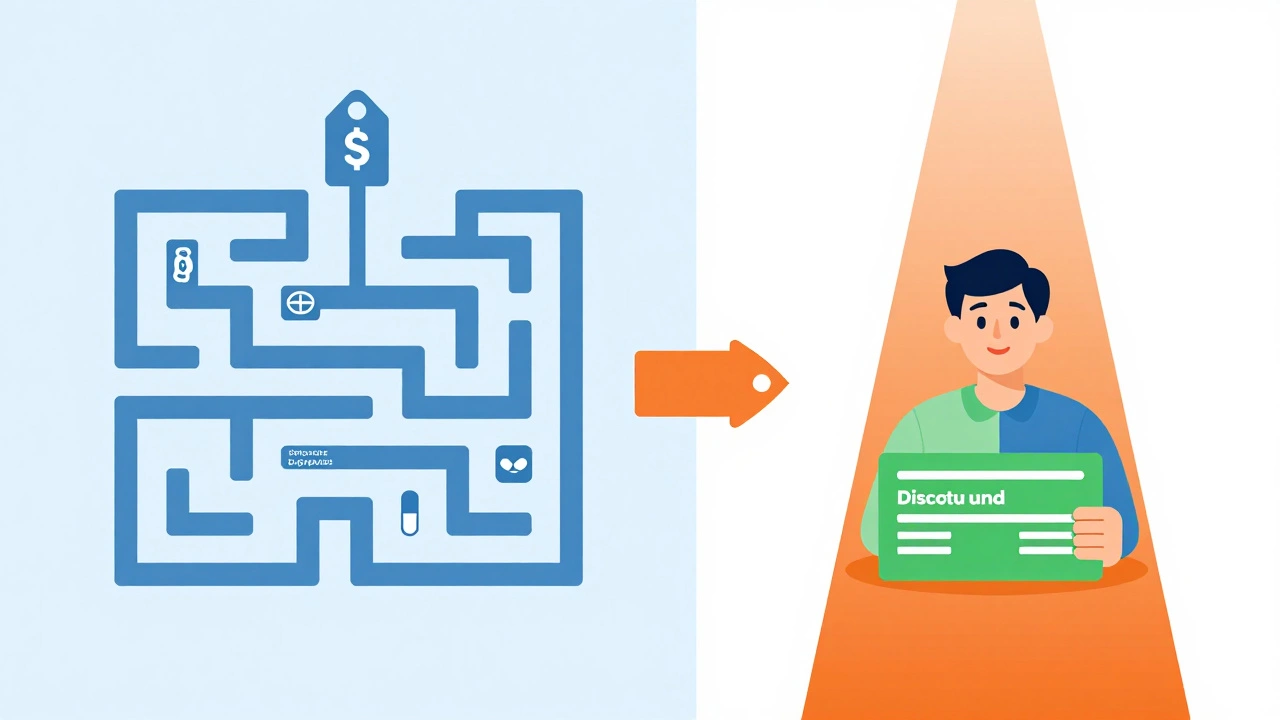
Prescription drug prices in the United States can feel like a mystery. One day you’re paying $15 for a generic medication, and the next time, at a different pharmacy, that same bottle costs $80. If you’ve been looking for ways to lower these out-of-pocket costs without navigating the complex world of health insurance plans, you’ve likely come across SingleCare, which is a prescription savings program that provides discounted rates on medications through participating pharmacies. The big question on everyone’s mind is simple: do I actually qualify?
The short answer is yes. In fact, almost anyone with a valid U.S. address qualifies. There are no income tests, no medical history reviews, and no waiting periods. However, understanding how it works-and where it doesn’t work-is crucial to making sure you actually save money instead of just swapping one bill for another.
Who Is SingleCare Designed For?
To understand qualification, we first need to look at who this service targets. SingleCare isn’t an insurance company. It’s a discount card provider. Think of it like a Groupon or a Costco membership for your medicine cabinet. You don’t need to meet specific criteria to join; you just need to use it correctly.
The primary audience includes:
- The Uninsured: People who have fallen through the cracks of employer-sponsored insurance or haven’t enrolled in marketplace plans during open enrollment.
- High-Deductible Plan Holders: Individuals who have insurance but haven’t met their annual deductible. Until that deductible is met, insurance often pays nothing, leaving you to pay full retail price.
- Seniors on Medicare: Specifically those in the "donut hole" (coverage gap) or those taking medications not covered by their Part D plan.
- People Seeking Price Transparency: Anyone tired of guessing what a prescription will cost before walking into the pharmacy.
If you fall into any of these groups, you are already qualified. The barrier to entry is essentially zero because there is no application process. You simply access the pricing tool online or via their app, show the coupon code to the pharmacist, and pay the discounted cash price.
Does SingleCare Work With Health Insurance?
This is where most people get tripped up. Can you use SingleCare if you already have private health insurance? Technically, yes. But strategically, you usually shouldn’t combine them for the same transaction.
Insurance companies operate on a network basis. They negotiate rates with pharmacies. When you present your insurance card, the pharmacy charges the negotiated rate, and your insurance covers its portion while you pay your copay or coinsurance. SingleCare operates outside this system. It negotiates direct discounts with pharmacies based on volume and cash payments.
Here is the rule of thumb: Always check both prices. Sometimes, your insurance copay might be $20. Other times, the SingleCare discounted cash price might be $12. In those cases, you would choose to pay the $12 cash price using SingleCare. However, doing so means that $12 does not count toward your insurance deductible or out-of-pocket maximum. This is a critical distinction for long-term financial planning.
| Feature | Health Insurance | SingleCare Discount Card |
|---|---|---|
| Qualification | Requires enrollment, premiums, and underwriting | Open to all U.S. residents; free to access |
| Pricing Model | Copays, coinsurance, deductibles | Fixed discounted cash price |
| Deductible Contribution | Yes, payments count toward limits | No, payments are out-of-pocket only |
| Best For | Chronic conditions, frequent prescriptions | Occasional meds, high-deductible gaps, uninsured |
Medicare and Medicaid Compatibility
A common concern is whether using a discount card violates government program rules. Let’s break this down clearly.
Medicaid: If you have Medicaid, you generally should not use SingleCare. Medicaid is designed to cover nearly all approved prescription costs with little to no out-of-pocket expense. Using a discount card would mean paying more than necessary and could complicate your billing records. Stick with your Medicaid card.
Medicare: This is more nuanced. Medicare Part D beneficiaries can use SingleCare, but they cannot use it *instead* of their Part D plan for covered drugs. That is illegal under federal law. However, you can use SingleCare for non-covered drugs or when comparing prices during the coverage gap. Many seniors find that checking SingleCare prices helps them decide whether to stay in their current Part D plan or switch during Open Enrollment. If a drug is significantly cheaper via SingleCare than your Part D copay, it might signal that your plan isn’t optimized for your needs.
How to Access Your Discounts
Since there is no formal "application," the process of qualifying is really just about accessing the tool. Here is how you start saving immediately:
- Visit the Platform: Go to the SingleCare website or download their mobile app. Both are free.
- Search Your Medication: Enter the name of your drug, dosage, and quantity. Be precise-generic names often yield better results than brand names.
- Compare Local Pharmacies: The tool will list nearby pharmacies (like CVS, Walgreens, Walmart, or local independents) and show the discounted price at each. Prices can vary wildly between locations for the exact same pill.
- Select Your Pharmacy: Choose the location with the best price.
- Show the Coupon: At checkout, present the digital coupon from your phone or print it out. Tell the pharmacist you want to use the SingleCare discount.
- Pay Cash: Complete the transaction as a cash payment. Do not swipe your insurance card unless instructed otherwise by the pharmacist for verification purposes (which is rare).

Limitations and What Isn’t Covered
While SingleCare is powerful, it isn’t magic. Understanding its limitations ensures you don’t waste time trying to use it in scenarios where it won’t help.
Specialty Drugs: High-cost specialty medications, such as those used for cancer, rheumatoid arthritis, or multiple sclerosis, often have limited discount availability. These drugs frequently require manufacturer patient assistance programs rather than pharmacy-level discounts.
Non-Participating Pharmacies: Not every pharmacy accepts SingleCare. While major chains like CVS, Walgreens, Rite Aid, and Walmart are widely included, smaller independent pharmacies may not be in the network. Always check the app before driving to a specific location.
No Coverage for Services: SingleCare only covers prescription medications. It does not provide discounts for doctor visits, lab tests, imaging, or over-the-counter supplements.
Is SingleCare Right for You?
You qualify for SingleCare if you are looking for immediate, transparent pricing on standard prescriptions. It is particularly valuable if you are uninsured, underinsured, or facing a high deductible year. It removes the anxiety of the unknown cost at the counter.
However, if you have comprehensive insurance with low copays, you likely won’t see significant savings on every fill. In those cases, keep SingleCare in your back pocket for occasional antibiotics or acute care medications where insurance copays might be higher than the discounted cash price.
The beauty of SingleCare is its flexibility. You don’t need to commit to a plan. You don’t need to prove your income. You just need to know your medication name and be willing to compare prices. In a healthcare system where transparency is often lacking, having a tool that gives you real-time data empowers you to make smarter financial decisions about your health.
Is SingleCare free to use?
Yes, SingleCare is completely free to access. There are no monthly fees, no hidden charges, and no membership costs. You simply use the platform to find discounted prices and present the coupon at the pharmacy.
Can I use SingleCare with my existing health insurance?
You can use SingleCare alongside insurance, but you typically cannot combine them for the same transaction. You must choose either to use your insurance benefits or the SingleCare cash discount. Compare the two prices before purchasing to ensure you are getting the lowest out-of-pocket cost.
Does SingleCare work with Medicare?
Medicare beneficiaries can use SingleCare for non-covered drugs or to compare prices, but they cannot use it to bypass their Medicare Part D plan for covered medications. Doing so may violate federal regulations. Always consult with your pharmacist or Medicare advisor.
Why are prices different at different pharmacies?
Pharmacies set their own wholesale acquisition costs and markups. Additionally, each pharmacy negotiates separate contracts with discount card providers like SingleCare. This competition allows consumers to shop around and find the best deal, which can vary significantly even within the same neighborhood.
Do payments with SingleCare count toward my insurance deductible?
No, because SingleCare transactions are processed as cash payments, they do not interact with your insurance provider. Therefore, these amounts do not count toward your annual deductible or out-of-pocket maximums. Keep this in mind if you are close to meeting your deductible threshold.