Pain Perception Simulator
Base Physical Sensation (Unchangeable): 4/10
Brain State: Neutral Monitoring
Step 1: The Trigger
You wake up with a mild ache in your lower back (Level 4). How do you respond?
Step 2: The Thought Pattern
Later that day, the sensation persists. What goes through your mind?
Step 3: The Action
It's evening. You have free time. How do you spend it?
Simulation Complete
Final Perceived Pain: /10
You wake up. Before your feet even touch the floor, you scan your body. Is that a twinge in your lower back? Is my knee throbbing again? You spend the first hour of your day cataloging discomforts, grading them on a scale of one to ten, and wondering if today will be a "good" or "bad" pain day. If this sounds familiar, you are not just dealing with physical symptoms; you are trapped in a cycle of pain obsession.
Chronic pain is exhausting enough without adding the mental load of constant monitoring. But here is the hard truth: obsessing over pain often makes it worse. Your brain has a volume knob for pain signals, and when you focus intensely on those sensations, you turn that knob up. This isn't about "being positive" or ignoring reality. It is about understanding how your nervous system works so you can stop feeding the fire.
Why does focusing on pain make it worse?
Focusing on pain activates the brain's threat detection systems. When you constantly scan for pain, your nervous system stays in a state of high alert, lowering your pain threshold and amplifying signals.
The Brain-Pain Loop: Why You Can't Look Away
To break the obsession, you first need to understand why it happens. It feels like a choice, but it is actually biology. When you have chronic pain is a persistent physical sensation that lasts longer than three months and often involves complex interactions between nerves, muscles, and the brain, your brain rewires itself. This process is called central sensitization.
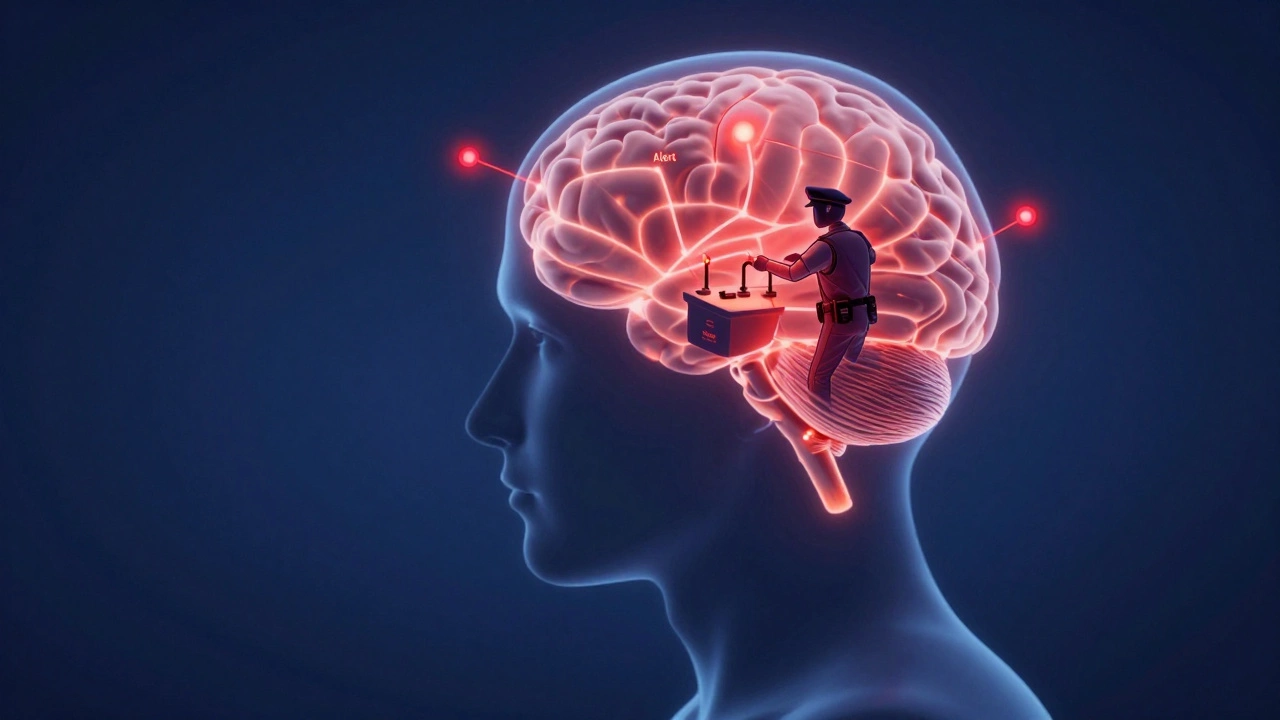
Imagine your brain as a security guard. In a healthy body, the guard ignores minor bumps and scrapes. But with chronic pain, the guard becomes paranoid. Every tiny signal from your body gets flagged as a major threat. When you obsess over the pain, you are essentially shouting at the guard, "Look! There it is! Pay attention!" The guard responds by sending more alarm bells (pain signals) to your conscious mind.
This creates a feedback loop. Pain causes fear and hyper-vigilance. Hyper-vigilance increases stress hormones like cortisol and adrenaline. These hormones inflame tissues and sensitize nerve endings. More sensitivity leads to more pain. Breaking this loop requires shifting your attention away from the threat, not by denying it, but by changing how you relate to it.
Step 1: Interrupt the Scanning Habit
The most immediate way to stop obsessing is to catch yourself doing it. We call this "body scanning," but in the context of pain, it is destructive. You might do this consciously (lying in bed checking every joint) or subconsciously (pausing mid-conversation to check your shoulder).
Here is a practical technique to interrupt this habit:
- Name the behavior: When you catch yourself checking your pain, say out loud or in your head, "I am scanning." This simple act engages the prefrontal cortex, the logical part of your brain, which helps dampen the emotional response of the amygdala.
- Set a timer: If you feel compelled to check your pain levels, set a timer for 10 minutes. Tell yourself you can obsess freely during those 10 minutes. Often, the urge passes before the timer goes off because the novelty of the worry wears down.
- Redirect sensory input: Pain obsession thrives in silence and stillness. Engage another sense. Listen to a podcast with complex lyrics, hold an ice cube in your hand, or smell strong peppermint oil. This forces your brain to process new data, temporarily overriding the pain signals.
Step 2: Practice Cognitive Defusion
In Cognitive Behavioral Therapy is a structured psychological treatment that helps individuals identify and change negative thought patterns and behaviors, there is a concept called "cognitive defusion." It means stepping back from your thoughts and seeing them as just words, not facts.
When you think, "My back is destroying me," you are fused with that thought. It feels like absolute truth. Defusion asks you to add distance. Try saying, "I am having the thought that my back is destroying me." Or, "Notice that you are thinking about your back right now."
This doesn't mean the pain isn't real. It means the *story* you are telling yourself about the pain is separate from the sensation. Many people with chronic pain suffer from "catastrophizing"-predicting the worst possible outcome. For example, "If I lift this box, I will never walk again." Catastrophizing is a strong predictor of increased pain intensity. By labeling these thoughts as "catastrophizing" rather than "truth," you reduce their power to trigger panic and muscle tension.

Step 3: Shift from Avoidance to Graded Activity
Obsession often leads to avoidance. You avoid walking because your knees hurt. You avoid social events because you're afraid of being in pain. While rest is necessary initially, long-term avoidance reinforces the belief that your body is fragile. This belief keeps your nervous system on high alert.
The solution is graded activity. This doesn't mean pushing through severe pain. It means doing small, manageable amounts of activity that you previously avoided, and gradually increasing them.
| Week | Activity | Duration | Goal |
|---|---|---|---|
| 1 | Gentle stretching | 5 minutes | Movement without fear |
| 2 | Short walk around block | 10 minutes | Build confidence |
| 3 | Walk + light gardening | 15 minutes | Functional movement |
| 4 | Longer walk + household chores | 20-30 minutes | Sustained activity |
The key is consistency, not intensity. By proving to your brain that movement is safe, you slowly turn down the volume on the threat response. This reduces the mental energy spent worrying about what *might* happen, allowing you to focus on what *is* happening.
Step 4: Cultivate Mindful Acceptance
Acceptance does not mean resignation. It doesn't mean you have to love your pain. It means you stop fighting the reality of it. Fighting pain creates secondary suffering-the frustration, anger, and grief that come from wishing things were different. This emotional pain adds layers to the physical sensation.
Mindfulness meditation is a powerful tool here. Start with just five minutes a day. Sit comfortably and bring your attention to your breath. When pain arises, don't try to push it away. Instead, observe it. Notice its location, temperature, and texture. Is it sharp? Dull? Burning? Pulsing?
By observing the pain objectively, you detach from the emotional reaction. You realize that pain is a sensation, not a catastrophe. Over time, this practice builds "pain tolerance" not by numbing you, but by giving you space between the sensation and your response. You learn that you can feel pain and still engage in life.

Step 5: Reclaim Your Identity Beyond Pain
When pain takes center stage, it can consume your identity. You start introducing yourself as "the person with fibromyalgia" or "the one with bad joints." This narrows your world. To stop obsessing, you must broaden your focus.
Identify values that are independent of your physical state. Are you a creative person? A friend? A learner? Find ways to express these values even with limitations. If you can't run, maybe you can write. If you can't cook elaborate meals, maybe you can plan community events. Engaging in meaningful activities releases dopamine and endorphins, natural pain relievers that also improve mood.
Connect with others who share your interests, not just your condition. Support groups are helpful, but spending all your time with other people in pain can reinforce the victim narrative. Balance support with inspiration. Surround yourself with people who talk about solutions, hobbies, and life, not just symptoms.
When to Seek Professional Help
Breaking the cycle of pain obsession is hard work. Sometimes, you need extra support. Consider seeking help from a psychologist specializing in health psychology is a field that focuses on how biological, social, and psychological factors influence health and illness. They can teach you advanced CBT techniques, acceptance and commitment therapy (ACT), or biofeedback.
Biofeedback uses sensors to show you real-time data on your heart rate, muscle tension, and skin temperature. Seeing these metrics drop when you relax provides concrete evidence that you can control your physiological response to pain. This breaks the illusion of helplessness.
If your obsession includes constant Googling of symptoms or frequent doctor visits despite reassurance, you may have health anxiety. This is a treatable condition. A therapist can help you develop strategies to manage uncertainty and reduce compulsive checking behaviors.
Practical Daily Checklist
Integrating these changes into daily life requires structure. Use this checklist to stay on track:
- Morning: Spend 5 minutes practicing mindful breathing before checking your body.
- Midday: Engage in one distracting activity (reading, puzzle, conversation) for 15 minutes.
- Afternoon: Perform one graded activity task from your plan.
- Evening: Journal about three things you did today that had nothing to do with pain.
- Night: Practice cognitive defusion on any lingering worries before sleep.
Stopping the obsession over chronic pain is not about curing the pain overnight. It is about reclaiming your mental space. By understanding the brain-pain loop, interrupting harmful habits, and rebuilding your life around values rather than symptoms, you can reduce the suffering associated with pain. You cannot always control the signal, but you can definitely control the volume.
Is it normal to still feel pain while trying these techniques?
Yes. These techniques aim to reduce suffering and improve function, not necessarily eliminate pain completely. Pain may fluctuate, but your reaction to it should become less intense over time.
How long does it take to see results from cognitive defusion?
Results vary, but many people report reduced anxiety within a few weeks of consistent practice. Full integration of new thought patterns may take several months.
Can medication help with pain obsession?
Medications like antidepressants or anti-anxiety drugs can help manage the emotional component of chronic pain. However, they work best when combined with psychological therapies like CBT.
What if I slip back into old habits?
Slips are part of the process. Don't judge yourself harshly. Simply notice the relapse, acknowledge it, and gently return to your new practices. Consistency matters more than perfection.
Are there apps that help with pain management?
Yes, apps like Headspace, Calm, or specialized pain management tools offer guided meditations, CBT exercises, and tracking features to support your journey.