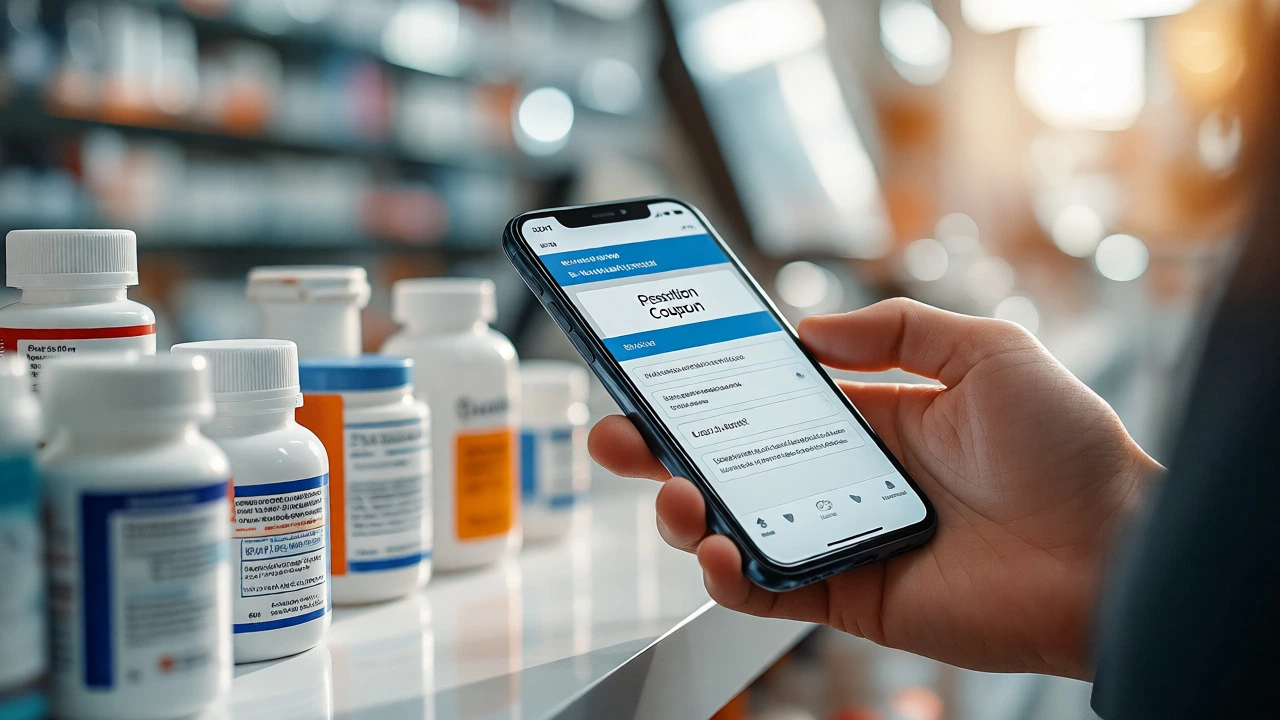
SingleCare Savings Calculator
Enter your medication details to see if a discount card like SingleCare could save you money compared to standard retail prices or your current insurance copay.
Analysis Results
You walk into a pharmacy, hand over your prescription, and the total makes you flinch. Maybe it’s $80 for a month of blood pressure meds, or $250 for an inhaler. You pull out your insurance card, hoping for help, but the copay is still high-or worse, you’re uninsured and paying full retail price. This is where SingleCare enters the picture. But before you sign up, you need to know the real answer to one burning question: How much does SingleCare cost a month?
Here is the short answer that might surprise you: $0. Yes, you read that right. SingleCare is a free prescription drug discount program. There are no monthly fees, no annual subscriptions, and no hidden charges. You don’t pay anything just to have the card in your wallet or the app on your phone. The only time money changes hands is when you actually buy medication at the pharmacy counter.
The Zero-Cost Model Explained
It feels too good to be true, doesn’t it? If you aren’t paying a subscription fee, how does SingleCare make money? Understanding this business model helps you trust the service more. SingleCare operates as a third-party administrator for pharmacy benefit managers (PBMs). When you use their coupon, you agree to a specific negotiated price with the pharmacy network. The pharmacy pays SingleCare a small administrative fee for processing that transaction. You, the patient, pay nothing upfront for access.
This structure differs significantly from traditional health insurance or membership-based healthcare clubs like Hims or Ro, which often charge a monthly retainer. With SingleCare, the barrier to entry is zero. You can download the app, create an account, and print a coupon in under two minutes without entering credit card details. This makes it an excellent safety net for people who want to check prices before committing to a purchase.
When Does SingleCare Actually Save You Money?
Just because the card is free doesn’t mean it always saves you money. A free tool is useless if it doesn’t lower your bill. So, when should you reach for the SingleCare app instead of your insurance card?
First, look at generic medications. SingleCare excels at discounts on common generics like lisinopril, metformin, or atorvastatin. These drugs are already cheap, but SingleCare can sometimes knock another 10-20% off the cash price. For example, if a 30-day supply of generic atorvastatin costs $12 at Costco, SingleCare might bring it down to $9. That’s not life-changing money, but it adds up over a year.
Second, consider brand-name drugs if you are uninsured. This is the sweet spot. Without insurance, brand-name drugs can cost hundreds of dollars. SingleCare coupons can sometimes reduce these prices by 50% or more. Imagine needing Eliquis for atrial fibrillation. Retail price might be $500+. A SingleCare coupon could drop that to $350. While still expensive, that $150 saving per month is significant.
However, there is a catch. If you have comprehensive health insurance with low copays, SingleCare might actually cost you *more* than your insurance plan. Insurance plans negotiate rates based on volume and risk pools, often securing better deals than discount cards. Always compare the SingleCare price against your expected insurance copay before handing over the coupon.
Hidden Costs and Real-World Pitfalls
While there is no monthly fee, users often encounter "hidden" frustrations that feel like costs in terms of time and effort. Let’s break down what you really pay.
- The Comparison Tax: You must actively check the price every time. Prices vary by pharmacy location, even within the same chain. A CVS in Brooklyn might offer a different SingleCare rate than a CVS in Queens. You spend five minutes checking the app to save ten dollars. Is your time worth less than $2/hour? For many, yes. For others, it’s annoying.
- The Pharmacy Refusal: Not all pharmacies accept SingleCare. Some independent pharmacies prefer their own discount programs or simply refuse third-party coupons due to processing hassles. You might drive to a pharmacy only to find they won’t honor the coupon. That’s a cost in gas and frustration.
- No Accumulation: Unlike insurance, using SingleCare doesn’t count toward your deductible. If you are trying to hit a high-deductible threshold for other medical expenses, using a discount card bypasses that progress. You pay out-of-pocket, and that money disappears into the void of non-covered services.

SingleCare vs. GoodRx: Which Free Card Wins?
You cannot talk about SingleCare without mentioning its biggest competitor, GoodRx. Both are free, both offer coupons, and both confuse consumers endlessly. Who wins depends on the drug.
| Feature | SingleCare | GoodRx |
|---|---|---|
| Monthly Fee | $0 | $0 (for basic coupons) |
| Premium Subscription | None | GoodRx Plus ($9.99/mo) offers extra savings |
| Best For | Uninsured patients, simple generics | Complex brand-name drugs, telehealth integration |
| Pharmacy Network | Wide, including many independents | Largest network, heavy focus on chains |
| Price Accuracy | Generally accurate, varies by region | Often shows lowest market price |
In practice, I’ve found SingleCare slightly easier to use for straightforward generics. The interface is cleaner, and the coupons are often accepted without argument at major chains like Walgreens and Rite Aid. GoodRx, however, tends to win on complex brand-name drugs where their larger data set allows them to squeeze out deeper discounts. Pro tip: Check both apps. It takes thirty seconds. If GoodRx shows $40 and SingleCare shows $60, use GoodRx. Loyalty to a brand doesn’t put money back in your pocket.
Who Should Use SingleCare?
Not everyone needs this tool. Here is a quick checklist to see if you fit the profile.
- You are uninsured or underinsured: If you have a high-deductible plan or no coverage, SingleCare is essential. It bridges the gap between retail price and affordability.
- You take multiple maintenance meds: Even small discounts stack. Saving $5 on three different prescriptions equals $15 a month, or $180 a year. That covers a nice dinner or a utility bill.
- You hate paperwork: No forms, no waiting periods, no eligibility checks. You just show the barcode.
- You travel frequently: If you run out of meds while traveling, you can download a coupon for any pharmacy nationwide instantly.
Conversely, skip SingleCare if you have robust employer-sponsored insurance with low fixed copays (e.g., $10 for generics, $30 for brands). Your insurance likely beats the discount card. Also, skip it if you use specialty pharmacies for rare diseases; those contracts are usually locked in with specific insurers.
Maximizing Your Savings Strategy
To get the most out of a free service, you need a strategy. Don’t just grab the first coupon you see. Follow these steps to ensure you’re truly getting the best deal.
Step 1: Ask your doctor for generics. Discount cards work best on generics. Brand-name drugs have patent protections that limit discounting power. If your doctor prescribes Lipitor (brand), ask if atorvastatin (generic) works for you. The switch alone can save 80%.
Step 2: Compare unit prices. Sometimes buying a 90-day supply is cheaper per pill than three 30-day supplies. SingleCare often has better rates for bulk purchases. Check the math before you commit.
Step 3: Stack with manufacturer coupons. This is tricky. Manufacturer coupons often state "cannot be used with insurance." Since SingleCare is not insurance, you can sometimes combine them. Call the pharmacy ahead of time. They can apply the manufacturer coupon first, then apply the SingleCare discount to the remaining balance. This double-dipping can lead to massive savings on expensive drugs.
Step 4: Keep your profile updated. Your age, zip code, and weight can affect pricing for certain drugs. Ensure your SingleCare profile reflects your current situation to avoid surprises at the counter.
Frequently Asked Questions
Is SingleCare really free?
Yes, SingleCare is completely free to use. There are no monthly fees, annual memberships, or hidden charges. You only pay the discounted price for your medication at the pharmacy counter when you choose to use their coupon.
Can I use SingleCare with my health insurance?
You generally cannot use SingleCare simultaneously with insurance for the same claim. You must choose one: either process the claim through your insurance or present the SingleCare coupon. However, you can use SingleCare for drugs that your insurance doesn't cover, or if the SingleCare price is lower than your insurance copay.
Does SingleCare work at all pharmacies?
SingleCare is accepted at over 40,000 pharmacies across the United States, including major chains like CVS, Walgreens, Walmart, and Rite Aid. Most independent pharmacies also accept it, but acceptance can vary by location. Always check the app for specific pharmacy availability before going.
Why did my SingleCare price change at the register?
Prices fluctuate based on pharmacy inventory, local regulations, and contract updates. Additionally, if you provided incorrect information (like wrong zip code or dosage) in the app, the actual price at the register may differ. Always confirm the final price with the pharmacist before payment.
Is SingleCare better than GoodRx?
Neither is universally better. SingleCare often provides simpler interfaces and competitive prices for generics and standard brands. GoodRx may offer deeper discounts on complex brand-name drugs and has a wider network. The best approach is to check both apps for your specific medication and choose the lower price.
Final Verdict: Is It Worth Your Time?
So, does SingleCare cost a month? No. It costs nothing financially. The real cost is attention. In a world where we are bombarded with subscription services, a truly free option is refreshing. For the average consumer managing chronic conditions or occasional prescriptions, SingleCare is a powerful tool. It puts control back in your hands. You aren’t beholden to opaque insurance negotiations. You can see the price, compare it, and decide.
If you haven’t downloaded the app yet, do it now. Next time you pick up a prescription, scan the barcode. If it saves you $10, you’ve just paid yourself for two minutes of work. If it doesn’t save anything, you lost nothing but a few seconds. That’s a pretty good deal.