Skincare Layering Simulator
Follow the steps below to build your perfect morning or evening routine. Click each step to mark it as complete and learn why the order matters.
You’ve got a bottle of hydrating toner and a potent serum sitting on your bathroom shelf. You’re staring at them, wondering which one hits the skin first. It’s not just about following a random rule; it’s about physics. Your skin absorbs products based on viscosity and pH levels. If you get the order wrong, you might be blocking the active ingredients from doing their job, essentially wasting money on products that sit on top of your face instead of sinking in.
The short answer? Toner goes first, then serum. But why? And does it matter if you have oily skin versus dry skin? Let’s break down exactly how these two products work together to boost your glow, without the fluff.
The Science Behind Layering Skincare
Think of your skin like a sponge. A dry, tight sponge won’t absorb water well. A damp, open sponge drinks it up instantly. That’s what toner is supposed to do. It preps the canvas. Most modern toners are designed to rebalance your skin’s pH level, which often gets disrupted by alkaline cleansers. By restoring the acidic mantle (usually around pH 4.5-5.5), you create the perfect environment for active ingredients to penetrate deeper.
Serums, on the other hand, are concentrated treatments. They contain high percentages of active ingredients like hyaluronic acid, vitamin C, or niacinamide. These molecules need direct access to the epidermis to work effectively. If you apply a thick moisturizer or even a heavy cream-based toner before a lightweight serum, you create a barrier. The serum can’t push through that barrier, so it stays on the surface, potentially feeling sticky or ineffective.
| Attribute | Toner | Serum |
|---|---|---|
| Primary Function | Cleansing residue removal, pH balancing, hydration prep | Targeted treatment (anti-aging, brightening, acne) |
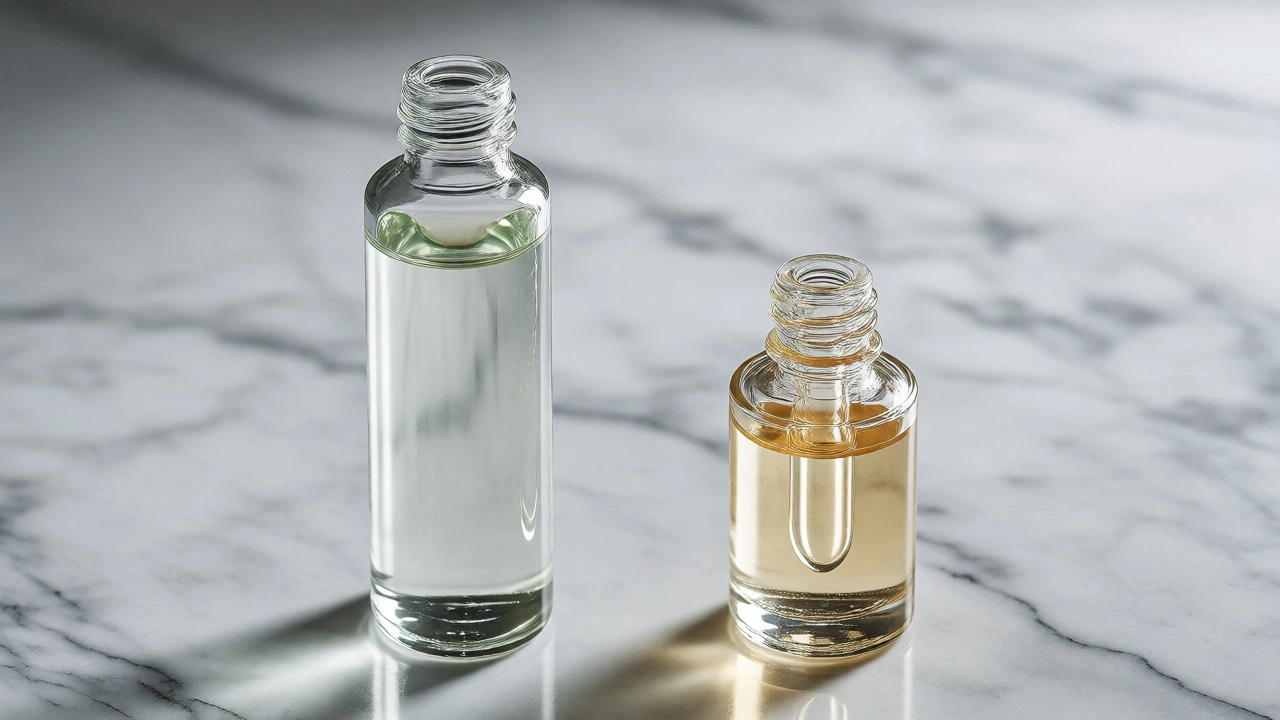
| Consistency | Watery, thin liquid | Gel-like, viscous, or oil-based but lightweight |
| Active Ingredient Concentration | Low to Moderate | High |
| Molecule Size | Small (to penetrate pores) | Varies (often small peptides or acids) |
| Application Timing | Immediately after cleansing | After toner, before moisturizer |
Why Toner Comes First
Many people skip toner because they remember the harsh, alcohol-heavy versions from the 90s that stripped your face raw. Those days are gone. Today’s toners are hydrating powerhouses. When you wash your face, especially with foaming cleansers, you strip away natural oils. This leaves your skin slightly alkaline. Applying toner right after cleansing helps bring your skin back to its natural acidic state quickly.
More importantly, toner acts as an absorption booster. Ingredients like glycerin or hyaluronic acid in toners draw moisture into the upper layers of the skin. This creates a "damp sponge" effect. When you apply your serum next, those active ingredients slide into hydrated cells more easily rather than struggling against dry, dead skin cells. It’s a simple step that amplifies the efficacy of everything that follows.
The Role of Serums in Your Routine
Serums are the heavy lifters of your skincare arsenal. While toners prepare the ground, serums deliver the payload. Because they are formulated with smaller molecular structures compared to creams, they penetrate deeper into the dermis. This is where collagen production happens, where pigmentation issues start, and where fine lines form.
If you apply serum over a layer of toner that hasn’t fully dried, you might dilute the serum slightly, but this is usually beneficial for sensitive skin types. However, if you apply serum over a thick, occlusive moisturizer, you block it completely. The general rule of thumb in dermatology is "thinnest to thickest." Toner is thinner than serum. Therefore, toner goes first. This ensures that the most expensive, potent part of your routine actually reaches the target area.
How Skin Type Changes the Approach
Not all skin behaves the same way. Your specific skin type might tweak how you handle this duo.
- Oily/Acne-Prone Skin: Look for toners with salicylic acid or witch hazel. These help unclog pores and control sebum. Follow with a niacinamide serum to regulate oil production further. Avoid heavy, creamy toners here; stick to watery formulas.
- Dry/Dehydrated Skin: Use a hydrating toner rich in ceramides or hyaluronic acid. Apply your hyaluronic acid serum while your skin is still damp from the toner. This traps moisture inside the skin, preventing transepidermal water loss.
- Sensitive Skin: Choose alcohol-free, fragrance-free toners with soothing ingredients like centella asiatica or aloe vera. Pair with a gentle peptide serum. Pat products on gently rather than rubbing, to avoid irritation.
- Mature Skin: Antioxidant toners (like green tea) followed by vitamin C serums in the morning can fight free radicals. At night, use a retinol serum after a hydrating toner to buffer potential irritation.
Common Mistakes That Ruin Absorption
Even if you know the order, you might be making subtle errors that reduce effectiveness. One major mistake is waiting too long between steps. Hyaluronic acid serums, for example, work best when applied to damp skin. If you let your toner dry completely before applying the serum, the serum might pull moisture *out* of your skin if the air is dry. Aim to apply serum within 30-60 seconds of toner application.
Another pitfall is using too much product. Toners are meant to be light. Drenching your face doesn’t mean better absorption; it can lead to pilling later when you apply makeup or sunscreen. Similarly, with serums, a pea-sized amount is usually enough for the whole face. Overloading the skin can cause congestion and breakouts, defeating the purpose of the treatment.

Step-by-Step Application Guide
Here is the exact sequence to maximize results:
- Cleanse: Remove dirt, oil, and makeup thoroughly.
- Tone: Pour a coin-sized amount onto cotton pads or your palms. Gently swipe across the face or press it in. Focus on areas with large pores or dryness.
- Wait Briefly: Give it 15-30 seconds to settle. Your skin should feel tacky, not wet or bone-dry.
- Serum: Dispense 2-3 drops. Warm it between your fingers. Press it into the skin, starting from the center of the face outward. Do not rub aggressively.
- Moisturize: Seal in the hydration and actives with a moisturizer appropriate for your skin type.
- SPF (AM only): Finish with broad-spectrum sunscreen during the day.
Do You Really Need Both?
This is a fair question. In a minimalist routine, some dermatologists argue that a good cleanser and a potent serum are sufficient. However, toner serves a unique bridging role. If you live in a hard water area (common in parts of New Zealand and the UK), tap water minerals can leave residue on the skin. A toner helps wipe this away. Additionally, if you struggle with uneven texture or dullness, the exfoliating properties of certain toners provide a benefit that serums alone don’t offer.
If you have limited budget or time, prioritize the serum for targeting specific concerns like wrinkles or dark spots. Add toner if you feel your skin isn’t absorbing products well or if you experience tightness after cleansing.
Can I mix toner and serum together?
You can, but it’s not ideal for maximum efficacy. Mixing them in your palm might dilute the concentration of the serum's active ingredients. It also prevents you from layering correctly, meaning the toner might not properly prep the pH balance before the serum hits. For best results, apply them separately.
Does it matter if my toner has alcohol?
Yes. Traditional toners with high concentrations of drying alcohols (like denatured alcohol) can strip the skin barrier, making it harder for serums to absorb without causing stinging. Modern toners use fatty alcohols (like cetyl alcohol) or no alcohol at all, which are safe and beneficial. Check the ingredient list; if alcohol is in the top three, proceed with caution.
Can I use serum without toner?
Absolutely. Toner is optional, not mandatory. Many effective routines consist of Cleanser → Serum → Moisturizer. If your skin feels balanced after cleansing and you don't have issues with residue or pH imbalance, you can skip toner. Just ensure you apply the serum to clean skin.
What if my serum pills under makeup?
Pilling often happens when silicone-based serums clash with water-based foundations, or when products haven't absorbed fully. Try reducing the amount of serum used, ensuring each layer dries completely before the next, or switching to a water-based serum if you use silicone-heavy primers.
Is vitamin C a toner or a serum?
Vitamin C is typically found in serums due to its instability and need for high concentration. However, some brands formulate vitamin C into toners for a gentler, less irritating approach. If you use both, apply the Vitamin C serum after the toner, unless the toner itself contains Vitamin C, in which case choose one to avoid over-exfoliation or irritation.