Organic Skincare Label Decoder
Not all products labeled "Natural" or "Organic" are created equal. Enter the details from your product packaging to understand its true certification level and safety profile.
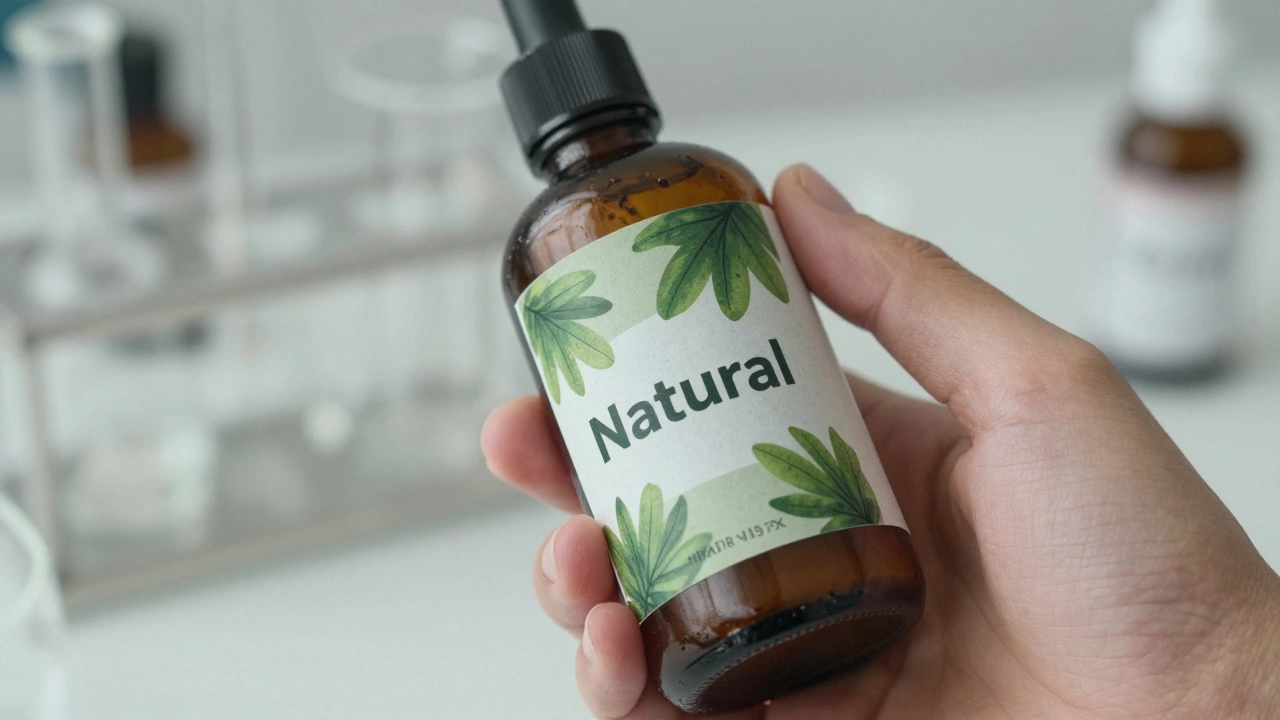
You pick up a bottle of face serum. The packaging is earthy brown, maybe green, with leaves drawn on it. It says "Natural" in big letters. But does that mean it’s safe? Does it mean no chemicals were used? Probably not. In the world of organic skincare is a category of personal care products made from ingredients grown without synthetic pesticides, fertilizers, or genetically modified organisms (GMOs)., the term "natural" means almost nothing legally. If you want to know what 100% organic products actually are, you have to look past the marketing and read the fine print.
Many consumers assume that if a product smells like lavender or comes in a glass jar, it is pure. This is a dangerous assumption. Without strict certification, a brand can put one drop of organic rose oil in a bottle filled with synthetic preservatives and call it "organic-inspired." To truly understand what you are putting on your skin, we need to break down the definitions, the certifications, and the reality of manufacturing these products.
The Difference Between Natural and Organic
The biggest confusion in the industry is the swap between "natural" and "organic." These words are often used interchangeably by marketers, but they mean very different things to regulators and farmers.
Natural skincare usually implies that the ingredients come from nature-plants, minerals, or animals. However, there is no legal definition for "natural" in the cosmetics industry in many regions, including the United States and much of Europe. A company can synthesize an ingredient in a lab that mimics a plant compound, or they can extract a plant using harsh solvents like hexane, and still claim it is natural. There is no oversight.
Organic skincare, on the other hand, refers specifically to how the ingredients were grown and processed. For a crop to be organic, it must be cultivated without synthetic pesticides, herbicides, or sewage sludge. The soil must be free of prohibited substances for at least three years before harvest. When you buy an organic product, you are paying for a verified supply chain, not just a vague idea of purity.
| Feature | Natural Skincare | Organic Skincare |
|---|---|---|
| Legal Definition | None (in most countries) | Strictly regulated by certifying bodies |
| Farming Methods | Not specified; may use pesticides | No synthetic pesticides or GMOs |
| Processing | May use harsh chemical solvents | Limited processing aids; no irradiation |
| Certification | Voluntary or self-declared | Required third-party audit |
| Traceability | Often opaque | Full supply chain tracking required |
Understanding Certification Bodies
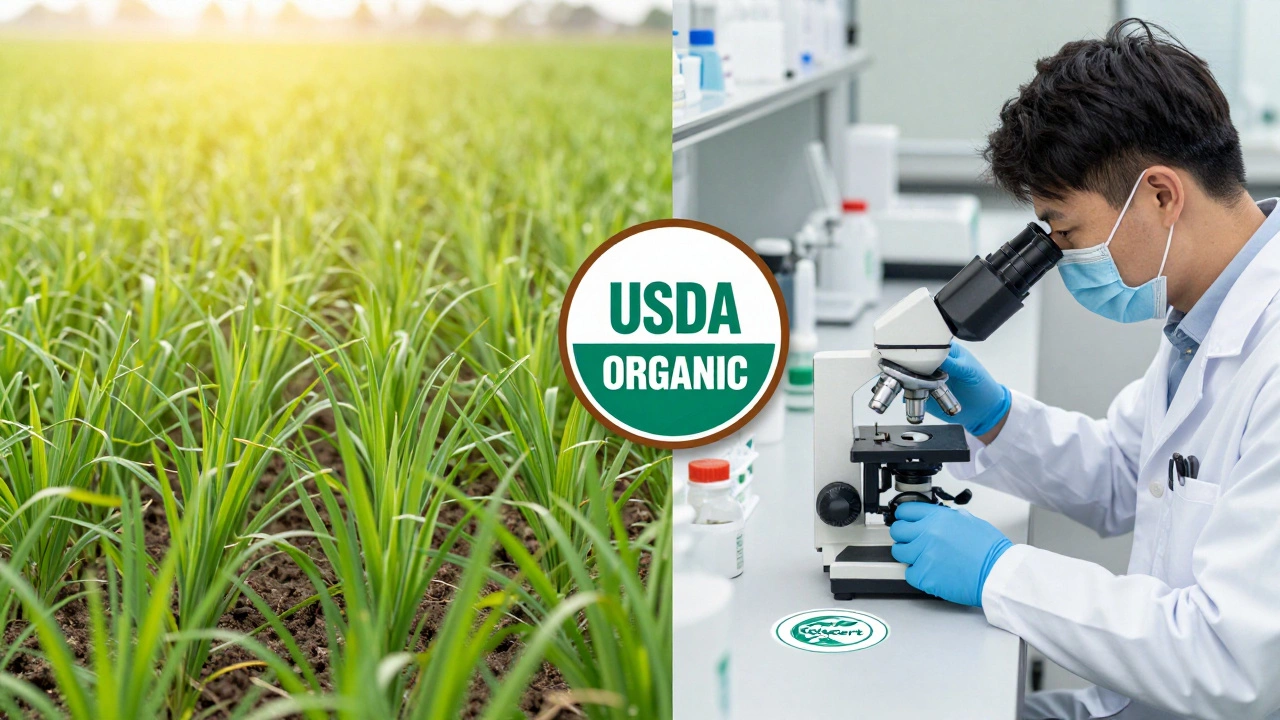
If "natural" is unregulated, who decides what is organic? You cannot trust the brand's word alone. You need to look for seals from accredited certification bodies. These organizations audit the farms, the factories, and the final products. They check records, inspect facilities, and test for residues.
In the United States, the USDA Organic is the federal standard for organic agricultural products, administered by the United States Department of Agriculture. is the gold standard. While the USDA originally focused on food, its National Organic Program (NOP) covers non-agricultural products like cosmetics if they contain agricultural ingredients. To carry the USDA seal, a product must meet specific thresholds.
Outside the US, other bodies hold significant weight:
- Ecocert: Based in France, this is one of the most recognized global standards. Ecocert has two levels: "Cosmos Organic" (95%+ organic) and "Cosmos Natural" (70%+ organic). Their criteria are strict regarding biodegradability and animal testing.
- Natrue: An Austrian-based organization that focuses heavily on the absence of synthetic fragrances and colors. Natrue labels are common in European markets.
- Soil Association: The UK’s leading organic certification body. They ensure that organic farming principles are applied to cosmetic ingredients.
When you see one of these logos, it means an independent auditor has verified the claims. Without a logo, the word "organic" on the front of the bottle is likely just marketing copy.
The Four Levels of Organic Content
Not all certified organic products are created equal. Under the USDA NOP framework, there are four distinct categories based on the percentage of organic ingredients. Understanding these tiers helps you decide what level of purity you need.
- 100% Organic: Every single agricultural ingredient must be certified organic. No non-organic ingredients are allowed. The product can display the USDA Organic seal. This is the highest standard. Examples include pure jojoba oil or shea butter where no water or synthetics are added.
- Organic: At least 95% of the ingredients (by weight, excluding water and salt) must be certified organic. The remaining 5% must be on an approved list of non-agricultural substances (like certain emulsifiers or preservatives that don’t have organic equivalents). These products can also use the USDA seal.
- Made with Organic Ingredients: At least 70% of the ingredients must be certified organic. These products cannot use the USDA seal but can list up to three organic ingredients on the front panel. The remaining 30% can be non-organic, provided they are allowed under NOP rules.
- Less than 70% Organic: These products can only list certified organic ingredients in the ingredient statement on the back. They cannot make any organic claims on the front packaging. This category is rarely marketed as "organic" because the branding restrictions are too tight.
If a brand tells you their product is "100% organic," they are claiming that every traceable component meets the strictest criteria. However, be wary of water. Water is not considered an agricultural ingredient, so a lotion that is 80% water and 20% organic oils might technically qualify for certain labels, even if the active organic content is low. Always check the ingredient list order.
Common Misconceptions About Organic Skincare
There are several myths that persist in the beauty community. Let’s clear them up with facts.
Myth 1: Organic means no preservatives. This is false and potentially dangerous. Bacteria and mold grow easily in nutrient-rich plant extracts. Without preservatives, your cream could become a breeding ground for pathogens within days. Organic products use preservatives, but they must be from an approved list. Examples include benzoic acid (found in berries), sorbic acid (found in rowan berries), and radish root ferment filtrate. These are effective and safer than some parabens, but they are still chemical compounds. "Preservative-free" organic products usually require refrigeration or have a shelf life of less than a month.
Myth 2: Organic products never cause allergies. Natural does not mean hypoallergenic. Poison ivy is 100% organic. Essential oils, which are staples in organic skincare, are potent allergens. Lavender, tea tree, and citrus oils can cause contact dermatitis in sensitive individuals. Just because something is grown in the dirt doesn't mean your skin will tolerate it. Always patch-test new products, regardless of their certification.
Myth 3: Organic is always better for the environment. Generally, yes, because organic farming avoids synthetic runoff. However, the environmental impact also depends on packaging and shipping. An organic cream shipped globally in heavy glass jars with plastic pumps may have a higher carbon footprint than a locally sourced conventional product in recyclable aluminum. Look for brands that combine organic ingredients with sustainable packaging practices.
How to Read the Label Like a Pro
Marketing teams are clever. They will highlight "organic aloe vera" on the front while listing it last in the ingredients. Here is how to verify a product’s authenticity.
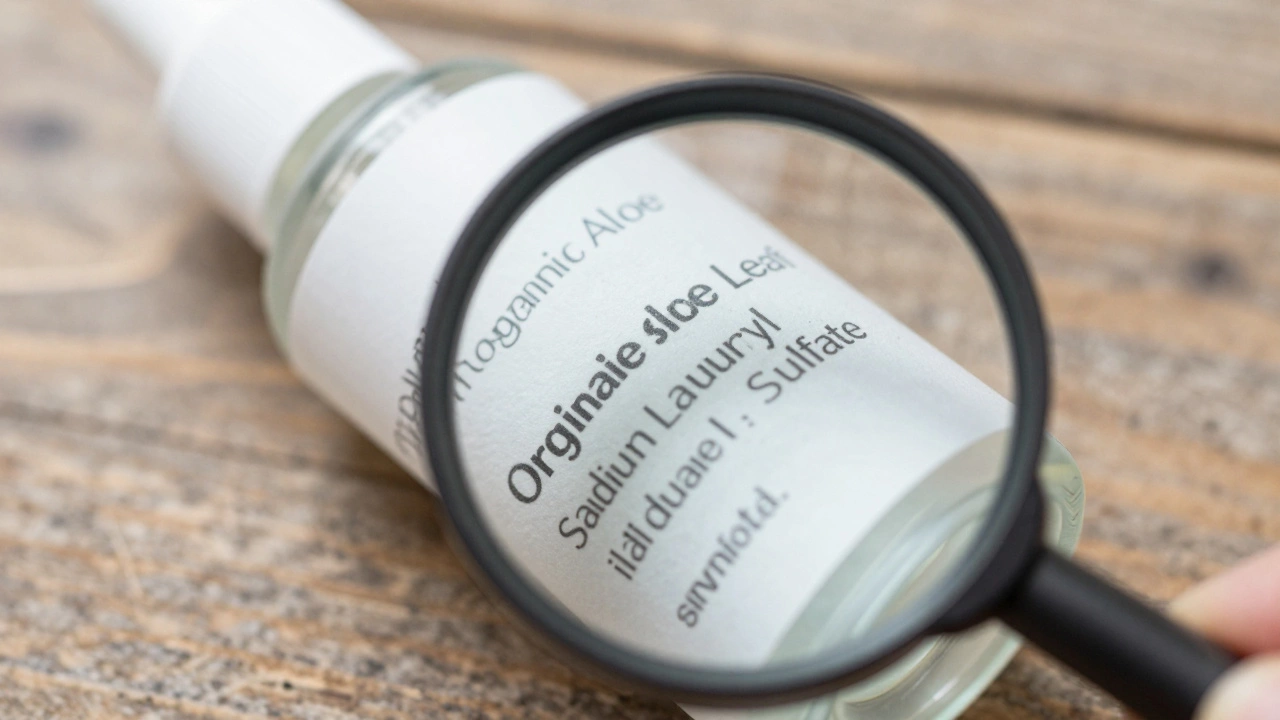
1. Check the Ingredient List Order Ingredients are listed by weight, from highest to lowest. If "Organic Aloe Barbadensis Leaf Juice" is the first ingredient, it makes up the bulk of the product. If it appears after "Fragrance (Parfum)," it is likely a minor additive used for marketing. For a true 100% organic experience, the top five ingredients should be recognizable plant-derived substances.
2. Look for the Seal Placement The USDA Organic seal or Ecocert logo should be prominent. If it is hidden in tiny text on the bottom flap, the brand may be trying to avoid scrutiny. Legitimate 100% organic brands wear their certification as a badge of honor.
3. Identify Non-Allowed Substances Even in "Made with Organic" products, certain ingredients are banned if they are synthetic and not on the approved auxiliary substances list. Common red flags include:
- Sodium Lauryl Sulfate (SLS) or Sodium Laureth Sulfate (SLES): Harsh detergents often derived from petroleum.
- Phthalates: Plasticizers used to make fragrances last longer, linked to hormonal disruption.
- Parabens: While debated, many organic standards restrict methylparaben and propylparaben due to consumer preference, though ethylparaben is sometimes allowed in small amounts.
- Synthetic Fragrances: Listed simply as "Fragrance" or "Parfum." Organic products should use essential oils or botanical extracts for scent.
4. Verify the Certifier Most reputable organic products will list the name of the certifying agency on the package or website. For example, "Certified by QAI" or "Licensed by CCOF." You can often go to the certifier’s website and search for the brand to confirm their status is current.
Why Pay More for Organic?
Organic skincare is typically more expensive than conventional alternatives. This cost difference isn't just markup; it reflects the reality of production.
Organic farming yields are often lower because farmers cannot use synthetic growth boosters. They rely on crop rotation, composting, and manual weed control, which are labor-intensive. Processing organic ingredients requires dedicated facilities to prevent cross-contamination with non-organic materials. This means smaller batch sizes and higher operational costs.
Furthermore, the certification process itself costs money. Brands pay annual fees for audits and testing. When you buy a 100% organic product, you are supporting a supply chain that prioritizes soil health, biodiversity, and worker safety over speed and volume.
For many users, the trade-off is worth it. They report fewer breakouts, less irritation, and a sense of alignment with their values. However, it is important to manage expectations. Organic skincare is not a miracle cure. It works best when matched to your skin type, just like conventional products.
Finding Trusted Brands
The market is flooded with "greenwashed" products. To find genuine 100% organic options, start with brands that have been certified for years. Look for transparency reports on their websites. Do they disclose their suppliers? Do they explain why they chose specific preservatives?
Start small. Try a single-ingredient product like organic coconut oil or argan oil. These are easy to verify and offer a baseline for what pure organic textures and scents feel like. Once you are comfortable, move to complex formulations like cleansers or moisturizers, ensuring they carry a recognized certification seal.
Remember, the goal is not perfection. It is progress. Choosing one 100% organic product over a synthetic one reduces your exposure to unnecessary chemicals and supports sustainable agriculture. Over time, you can build a routine that is both effective and aligned with your health goals.
Is 100% organic skincare safe for sensitive skin?
Not necessarily. While organic products avoid many synthetic irritants, they often contain essential oils and botanical extracts that can trigger allergic reactions. Always patch-test new products, especially if you have eczema or rosacea. Look for brands that specify "fragrance-free" or "essential oil-free" if you are highly sensitive.
Can a product be labeled organic if it contains water?
Yes. Water is not considered an agricultural ingredient, so it is excluded from the percentage calculation for organic content. A product can be 95% organic by weight of agricultural ingredients, even if water makes up half the total volume. This is common in lotions and serums.
What is the difference between USDA Organic and Ecocert?
USDA Organic is a US federal standard focused on agricultural integrity. Ecocert is a private international standard that includes additional criteria for environmental impact, such as biodegradability of ingredients and restrictions on animal testing. Both are rigorous, but Ecocert is often stricter on processing methods and packaging sustainability.
Do organic products expire faster?
They can. Because organic preservatives are often milder than synthetic ones, some organic products have shorter shelf lives. However, many modern organic formulations use stable natural preservatives that allow for 12-24 months of stability. Always check the Period After Opening (PAO) symbol on the packaging, which indicates how many months the product is safe to use after opening.
Is "clean beauty" the same as organic?
No. "Clean beauty" is a marketing term with no legal definition. It generally means a brand avoids certain controversial ingredients, but it does not guarantee organic farming practices or third-party certification. A clean product can still be made from conventionally grown crops. Organic is a verifiable standard; clean is a brand promise.