Cosmetic Classification Analyzer
Enter a product claim (e.g., 'reduces wrinkles', 'treats acne', 'moisturizes skin') to see if it classifies as a cosmetic, drug cosmetic, or OTC drug based on regulatory guidelines.
Enter a product claim to see its classification.
When you grab a bottle of face cream, a tube of lipstick, or a bottle of shampoo, you might think it’s all just "cosmetics." But not all cosmetic products are treated the same way - especially when it comes to safety, testing, and what they’re allowed to claim. In fact, there are three clear classifications of cosmetics used by regulators around the world, including in the U.S., EU, Australia, and New Zealand. Knowing these helps you understand why some products feel more like medicine and others are just for looks.
1. Cosmetics (General Use)
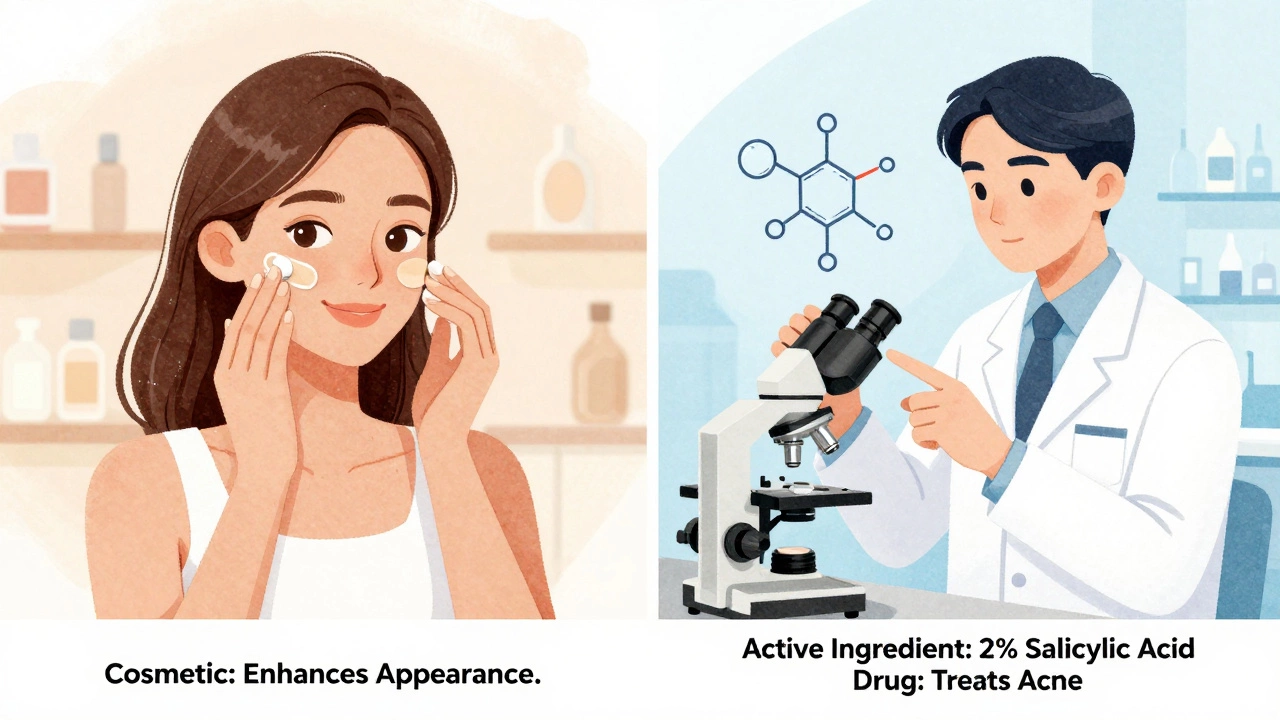
This is the broadest category - the kind most people picture when they hear the word "cosmetic." These products are meant to clean, beautify, promote attractiveness, or alter appearance - without affecting the body’s structure or function.
Think of it this way: if it doesn’t change how your skin, hair, or nails work, it’s probably in this group. Examples include:
- Mascara, eyeliner, and foundation
- Shampoos and conditioners
- Perfumes and body sprays
- Lip balms (unless they claim to heal chapped lips)
- Body lotions that just moisturize
These products don’t need pre-market approval from health agencies. But they still can’t make medical claims. If a lotion says it "reduces wrinkles by 40% in four weeks," that’s a red flag. That’s not a cosmetic - that’s a drug.
Manufacturers are responsible for ensuring safety, but they aren’t required to prove it before selling. That’s why ingredient transparency matters. If you see unfamiliar chemicals, look them up. The FDA and similar agencies keep public lists of banned or restricted ingredients.
2. Drug Cosmetics (Cosmeceuticals)
This is where things get blurry - and why you’ll see terms like "cosmeceutical" tossed around in marketing. A cosmeceutical isn’t a legal category in most countries. It’s a marketing term. But if a cosmetic product makes a therapeutic claim, it crosses the line into drug territory.
Here’s the rule: if it claims to treat, prevent, or alter a biological function, it’s no longer a cosmetic - it’s a drug. For example:
- A moisturizer that says "reduces acne" → drug
- A shampoo that claims "stops dandruff" → drug
- A cream that says "reverses sun damage" or "stimulates collagen" → drug
- A serum that says "treats melasma" → drug
In the U.S., the FDA treats these as drugs. That means they must go through clinical testing, get approved, and meet strict manufacturing standards. In the EU and Australia, the rules are similar - claims determine classification, not the product’s label.
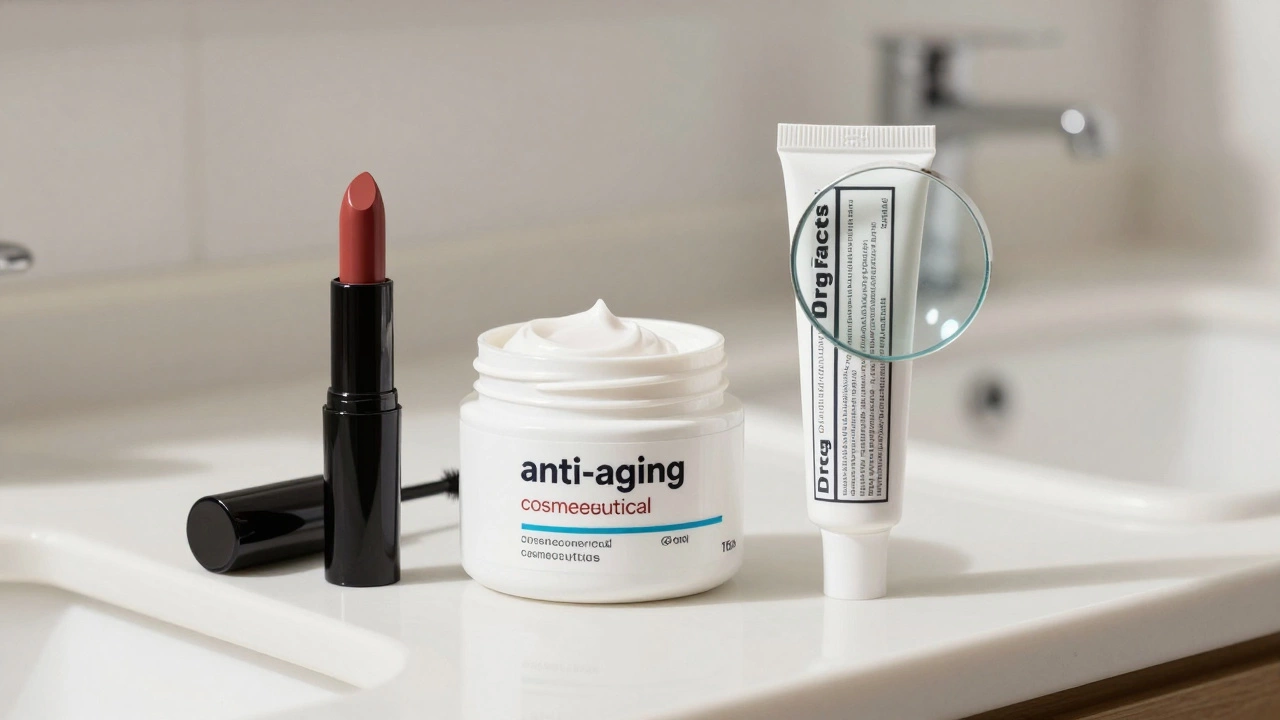
Many brands walk this line. You’ll see products with ingredients like retinol, niacinamide, or hyaluronic acid. If the label just says "anti-aging moisturizer," it’s a cosmetic. If it says "clinically proven to reduce fine lines," it’s a drug. The difference? One needs FDA approval. The other doesn’t.
3. Over-the-Counter (OTC) Drugs with Cosmetic Benefits
This third category is where cosmetics and medicine fully overlap. These are products that are regulated as drugs but are sold without a prescription because they’re considered safe for self-use.
Think of these as the middle ground: they’re not just for looks, but they’re not as strong as prescription treatments. Common examples include:
- Anti-dandruff shampoos (with zinc pyrithione or selenium sulfide)
- Acne treatments with benzoyl peroxide or salicylic acid
- Hydrocortisone creams for mild skin irritation
- Teeth whitening strips with hydrogen peroxide
- Sunscreen with SPF 15 or higher (yes, sunscreen is legally a drug in the U.S.)
These products must follow specific FDA monographs - standardized lists of approved ingredients, doses, and labeling rules. They’re tested for safety and effectiveness. You’ll see a "Drug Facts" panel on the back, just like you do with pain relievers.
Here’s a key point: sunscreen is one of the most misunderstood products in this category. Many people think it’s just a cosmetic. But in the U.S., any product claiming sun protection is regulated as a drug. That’s why you can’t just slap SPF 50 on a moisturizer and call it a day - it has to meet drug standards.
Why Does This Matter to You?
Understanding these three categories helps you make smarter choices. If you have sensitive skin, you might avoid products with drug ingredients unless you really need them. If you’re trying to treat acne or rosacea, you’ll know when to look for OTC drugs instead of just "anti-redness" creams.
It also explains why some products are cheaper. General cosmetics have lower development costs. OTC drugs require clinical data, manufacturing audits, and regulatory reviews - which adds to the price. That’s why a $15 acne wash with 2.5% benzoyl peroxide might be more effective than a $60 "natural" serum with no proven active ingredients.
And here’s something most people don’t realize: just because a product is sold in a fancy boutique or has "dermatologist-tested" on the label doesn’t mean it’s regulated as a drug. That phrase means nothing legally. It’s just marketing.
How to Tell What Category Your Product Is In
Here’s a quick way to check:
- Look at the purpose - Is it just for beauty? Then it’s a cosmetic.
- Look at the claims - Does it say it treats, prevents, or cures? Then it’s a drug.
- Look at the label - Does it have a "Drug Facts" panel? Then it’s an OTC drug.
Also, check the ingredient list. Active ingredients in OTC drugs are clearly listed with percentages. In cosmetics, active ingredients are often hidden in the middle of the list - if they’re even mentioned.
If you’re unsure, search the product’s name + "FDA approved" or "OTC monograph." If it shows up, it’s regulated as a drug. If not, it’s likely just a cosmetic - no matter how much it promises.
What About Natural or Organic Cosmetics?
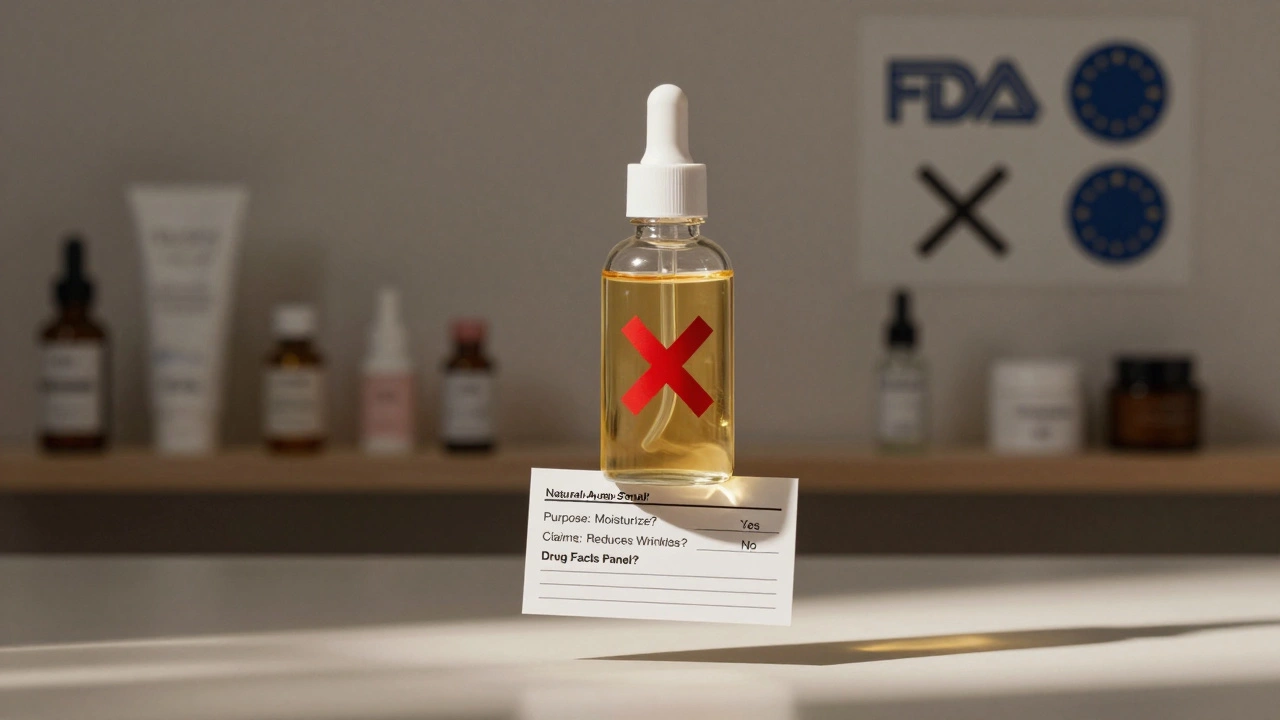
"Natural" and "organic" don’t change the classification. A product with aloe vera and chamomile is still a cosmetic if it only claims to moisturize. If it says it "heals eczema," it becomes a drug - even if it’s 100% plant-based.
Regulators don’t care if it’s made in a lab or a forest. They care about what it does. That’s why some "clean beauty" brands get in trouble - they make drug claims without following drug rules.
Final Thought: Know What You’re Using
Cosmetics are meant to enhance. Drugs are meant to heal. The line between them isn’t just legal - it’s about safety. A product that’s safe for daily use as a cosmetic might not be safe if it’s being used like a medicine.
Always read the label. Don’t trust buzzwords. And if something promises dramatic results without a prescription, ask: is this a cosmetic, or is it secretly a drug?
Are all makeup products considered cosmetics?
Yes, makeup like foundation, lipstick, and eyeshadow are classified as cosmetics - as long as they only claim to enhance appearance. If a product says it "treats acne" or "reduces wrinkles," it crosses into drug territory and must be regulated as such.
Can a moisturizer be both a cosmetic and a drug?
No - a product can’t be both. If it only hydrates skin, it’s a cosmetic. If it claims to treat dryness caused by eczema or reduce itching, it’s a drug. Regulators classify based on function and claims, not ingredients.
Why is sunscreen classified as a drug?
Because sunscreen prevents sunburn and reduces the risk of skin cancer - both medical outcomes. In the U.S., the FDA requires sunscreens to meet drug standards, including testing for SPF accuracy and ingredient safety. That’s why sunscreen labels have a Drug Facts panel.
Are organic or natural cosmetics safer?
Not necessarily. Natural ingredients can still cause allergic reactions or be contaminated. The term "organic" has no legal meaning in cosmetics unless certified by a government agency. Safety depends on how the product is made and tested - not whether it’s labeled "natural."
What should I do if a product makes a medical claim?
Check the label for a Drug Facts panel. If it’s missing and the product claims to treat a condition, it may be illegally marketed. Report it to your country’s health regulator. In New Zealand, that’s Medsafe. In the U.S., it’s the FDA. You can also look up the product’s approval status online.