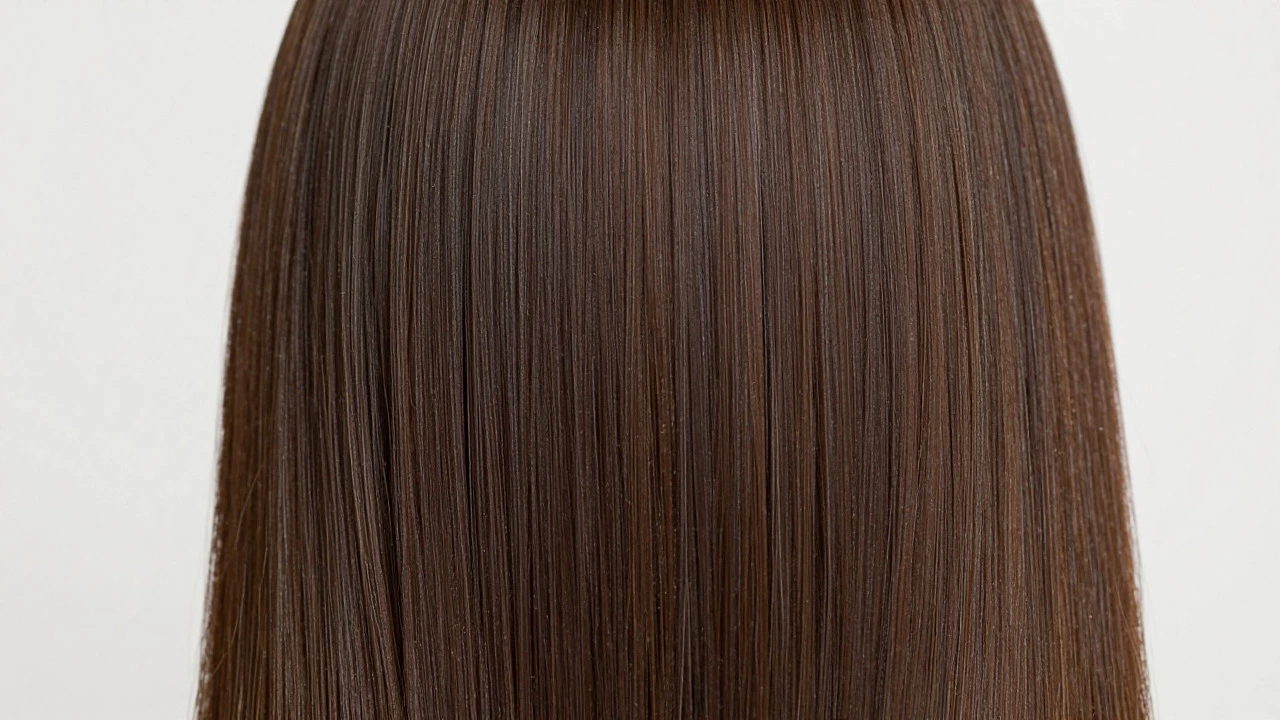
Level 1 Hair Type Identifier
Have you ever looked in the mirror and wondered why your hair just refuses to hold a curl? Or maybe you’re tired of products weighing your strands down into a greasy mess within hours of washing. If this sounds familiar, you likely have level 1 hair. It’s the straightest texture on the spectrum, characterized by a lack of natural wave or curl pattern. While it often looks sleek and shiny, managing it requires a completely different approach than wavy or curly hair.
Understanding what level 1 hair actually is-and how to care for it-can transform your routine from a daily struggle into a quick, effortless process. Let’s break down the science behind this texture, the specific subtypes, and exactly how to keep it looking healthy without that dreaded flat appearance.
The Science Behind Straight Hair
Level 1 hair is defined by its shape at the follicle level. Unlike curly hair, which grows out of an oval or flat follicle, straight hair emerges from a perfectly round follicle. This circular structure allows the hair shaft to grow evenly in all directions, resulting in a smooth, linear strand without bends or waves.
This structural difference has a major impact on how your scalp produces oil. Sebum, the natural oil produced by your sebaceous glands, travels down the hair shaft to moisturize the ends. With straight hair, there are no curves or obstacles to slow this journey down. The oil slides effortlessly from root to tip. This is why level 1 hair often looks shinier than other textures-it reflects light more uniformly-but also why it gets oily so much faster.
If you’ve ever tried to use heavy conditioners meant for curly hair, you probably noticed your hair turning limp and lifeless almost immediately. That’s because the cuticle layer of straight hair lies very flat against the shaft. When you add too much moisture or weight, there’s nowhere for it to go but down, dragging the hair with it.
The Three Subtypes of Level 1 Hair
Saying you have "straight hair" isn’t quite precise enough. The Andre Walker Hair Typing System, popularized in the 1990s, divides level 1 hair into three distinct categories: 1A, 1B, and 1C. Knowing which one you have helps you choose the right products and styling techniques.
| Type | Texture & Body | Oil Production | Styling Difficulty |
|---|---|---|---|
| Type 1A | Very fine, lacks volume, looks like silk | High (gets oily quickly) | Hard to hold styles |
| Type 1B | Medium thickness, has some body and bounce | Moderate | Easier to style than 1A |
| Type 1C | Thick, coarse, may have a slight wave | Low to Moderate | Can be frizzy, holds curls better |
Type 1A: The Fine and Flat
Type 1A is the finest of the straight hairs. It’s incredibly soft and silky but notoriously difficult to manage if you want any kind of volume. Because the strands are so thin, they can easily get weighed down by even lightweight products. People with 1A hair often wash their hair every day because the sebum reaches the ends rapidly, making it look dirty after just one night.
Type 1B: The Balanced Straight
Type 1C: The Thick and Resistant
Type 1C is thick, coarse, and sometimes stubborn. It might even have a slight S-shaped wave when wet or in humid conditions. Because the strands are thicker, they don’t absorb oil as quickly, meaning you can probably go longer between washes. However, 1C hair is prone to frizz because the cuticle is less uniform, allowing humidity to penetrate the shaft easier.
Common Myths About Straight Hair
There’s a pervasive myth that straight hair is "low maintenance." In reality, it just has *different* maintenance needs. Here are a few misconceptions we need to bust:
- Myth: You don’t need conditioner. Fact: All hair types need hydration. The key is using a lightweight, volumizing conditioner focused only on the ends, not the roots.
- Myth: Straight hair is healthier. Fact: Straight hair shows damage more obviously because there’s no curl pattern to hide split ends or breakage. A single split end stands out starkly against a straight shaft.
- Myth: Heat styling ruins it instantly. Fact: While heat causes damage over time, straight hair often responds well to heat tools like flat irons. The trick is using a high-quality heat protectant and keeping the temperature below 350°F (175°C).
How to Care for Level 1 Hair
Your goal with level 1 hair is usually two-fold: manage oil production and create the illusion of volume. Here is a practical routine tailored to this texture.
Washing Strategy
For Type 1A and 1B, washing every day or every other day is normal. Don’t feel guilty about it! Use a clarifying shampoo once a week to remove product buildup, which can make straight hair look dull and heavy. Look for keywords like "volumizing," "balancing," or "clarifying" on the bottle. Avoid terms like "moisturizing," "hydrating," or "creamy" unless you have Type 1C hair.
Conditioning Correctly
Apply conditioner only from the mid-lengths to the ends. Never apply it to your scalp. If you have very fine hair (1A), consider skipping conditioner on days when you wash your hair with a gentle, sulfate-free shampoo. Alternatively, try a rinse-out conditioner that is specifically labeled as "weightless."
Drying Techniques
How you dry your hair makes a massive difference. Towel-drying by rubbing vigorously creates friction, leading to frizz and breakage. Instead, gently squeeze excess water out with a microfiber towel or an old cotton t-shirt.
If you use a blow dryer, flip your head upside down while drying the roots. This lifts the hair away from the scalp, creating instant volume. Once the roots are dry, you can turn your head back up and smooth the lengths. Using a round brush while blow-drying can also help lift the roots and add body.
Styling Products That Work
Avoid heavy creams, butters, and oils. These are kryptonite for level 1 hair. Instead, opt for:
- Volumizing Mousse: Applied to damp hair, this adds body without stiffness.
- Texturizing Spray: Great for adding grit and hold to fine hair, helping it stay in place.
- Dry Shampoo: Your best friend. Use it not just when your hair is dirty, but as a preventative measure on clean hair to absorb oil and add texture at the roots.
- Hair Sprays with Flexibility: Choose sprays that offer hold but still allow movement, so your hair doesn’t look crunchy.
When to See a Professional
While home care works wonders, professional treatments can elevate your level 1 hair game. Regular trims every 8-10 weeks are essential. Because straight hair hangs vertically, split ends travel up the shaft faster than in curly hair, where the bend hides them. Keeping the ends fresh prevents the hair from looking ragged.
If you’re struggling with extreme oiliness despite adjusting your routine, consult a dermatologist. Conditions like seborrheic dermatitis or hormonal imbalances can affect sebum production regardless of hair type. Similarly, if your hair feels unusually brittle or breaks easily, it might be a sign of protein deficiency or thyroid issues, which warrant medical attention.
Embracing Your Texture
Level 1 hair has its own unique beauty. It shines brilliantly, styles smoothly, and can look incredibly polished with minimal effort once you master the right products. Stop fighting your texture and start working with it. By understanding whether you’re 1A, 1B, or 1C, you can tailor your routine to enhance your natural shine and volume, rather than trying to force your hair to behave like someone else’s.
Is level 1 hair rare?
No, level 1 hair is actually quite common, particularly among people of East Asian descent. However, within populations of European or African descent, straight hair is less common compared to wavy or curly textures. Genetics play the biggest role in determining your hair type.
Can I change my hair type from 1 to 2?
You cannot permanently change your genetic hair type. However, you can temporarily alter the texture using heat styling tools like curling irons or wands. Chemical treatments like perms can also induce waves or curls, but these are damaging and require significant upkeep. Remember, any change is temporary or chemically induced; your new growth will always be your natural level 1 texture.
Why does my straight hair get frizzy?
Frizz in straight hair is usually caused by humidity penetrating the hair cuticle or damage from heat and brushing. Type 1C hair is most prone to this due to its coarser texture. To combat frizz, use a heat protectant, avoid over-brushing, and consider using a light anti-frizz serum on the ends only.
Should I sleep with my hair tied up?
Yes, but loosely. Tying your hair tightly can cause tension alopecia or breakage. For level 1 hair, a loose braid or a low ponytail with a silk scrunchie can prevent tangling and reduce friction against your pillowcase, which helps maintain shine and reduce morning frizz.
Does diet affect straight hair health?
Absolutely. Hair is made primarily of keratin, a protein. A diet lacking in protein, iron, or biotin can lead to weak, brittle hair that breaks easily. Staying hydrated also helps maintain the elasticity of your hair strands, preventing them from snapping during styling.