Facial Treatment Recommendation Tool
Find your ideal facial treatment
Answer a few quick questions and get personalized treatment recommendations based on the latest clinical data from top dermatology clinics worldwide.
Your Personalized Treatment Recommendations
Treatment 1
Treatment 2
Treatment 3
Why these treatments work for you
Want to look younger without surgery? You’re not alone. Millions of people are turning to facial treatments that actually work-no scalpels, no downtime, just real results. But with so many options out there, how do you know which one delivers the most noticeable, long-lasting lift? The truth is, there’s no single "best" treatment for everyone. It depends on your skin type, how much aging you’re dealing with, and what kind of results you’re after. Let’s cut through the noise and break down what really works in 2026.
What causes skin to age? (And why treatments matter)
Before we talk about treatments, you need to understand what’s happening under your skin. As you get older, your body produces less collagen and elastin-the proteins that keep skin firm and bouncy. Sun damage, stress, poor sleep, and even pollution speed this up. By your late 30s, you might notice fine lines around the eyes, sagging jawline, or dullness. By your 50s, volume loss in the cheeks and deeper wrinkles become more obvious. That’s not just "getting older." It’s a biological shift.
Topical creams help, sure. But they can’t rebuild what’s already broken. That’s where targeted facial treatments come in. They go deeper. They stimulate your skin’s natural repair system. And when done right, they can turn back the clock by years.
The top 5 facial treatments proven to look younger
Based on clinical data, patient reviews, and dermatologist consensus from clinics in Auckland, Sydney, and Los Angeles, these five treatments consistently deliver visible results.
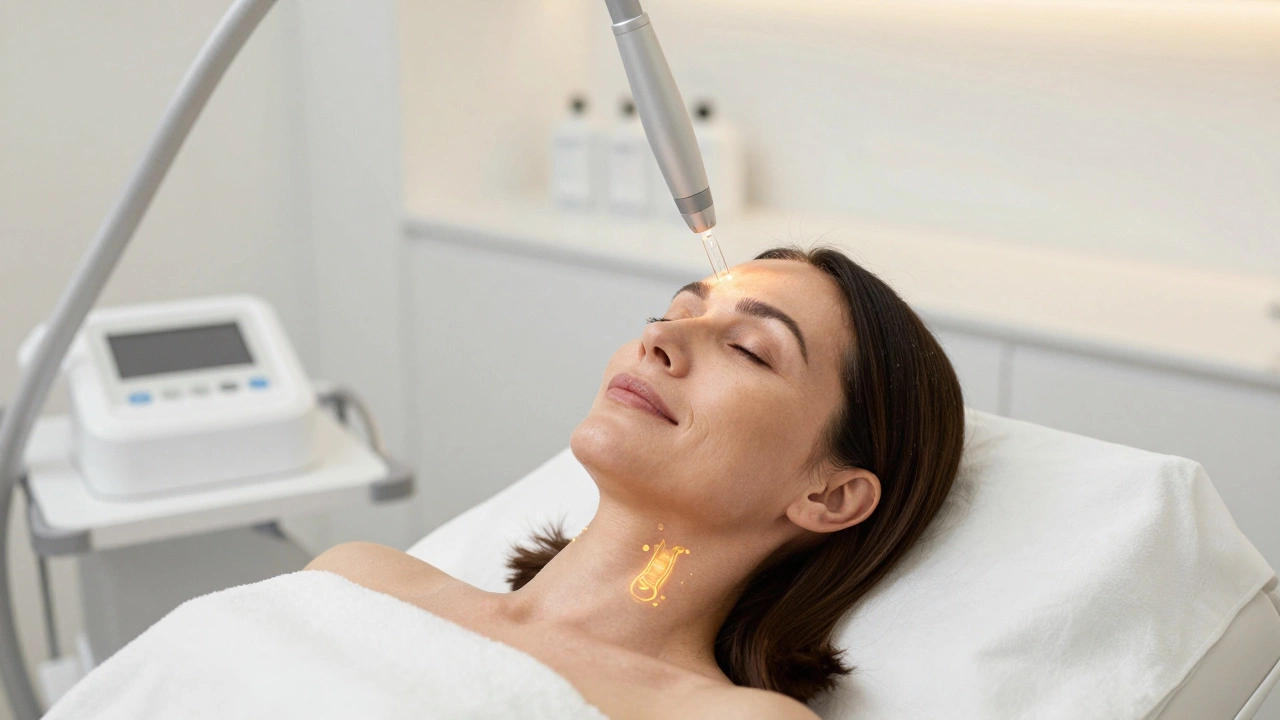
- Radiofrequency (RF) microneedling - This combines tiny needles with heat energy. The needles create micro-injuries, while the RF energy heats the deeper layers of skin. Your body responds by pumping out new collagen and elastin. Results? Tighter skin, smoother texture, reduced pores. Most people see improvement after 2-3 sessions. It works well for mild to moderate sagging, especially around the jaw and neck.
- High-intensity focused ultrasound (HIFU) - Think of it like a targeted ultrasound for your face. It heats tissue at precise depths to lift and tighten without touching the surface. It’s the go-to for people with early jowls or a softening chin line. One 2025 study in the Journal of Clinical and Aesthetic Dermatology showed 87% of participants had measurable lifting after a single session. No downtime. Results last 12-18 months.
- PRP (Platelet-Rich Plasma) facial - Also called the "vampire facial," this uses your own blood. A small sample is spun in a centrifuge to isolate platelets, then injected or applied with microneedling. Platelets release growth factors that jumpstart healing and collagen production. It’s not a quick fix, but it’s great for improving skin tone, reducing fine lines, and adding glow. Best for those who want natural-looking renewal.
- Hydrafacial with antioxidant boosters - This isn’t just a spa treatment anymore. Modern Hydrafacials now include medical-grade serums with peptides, NAD+, and stabilized vitamin C. It deeply cleanses, hydrates, and delivers powerful antioxidants that fight free radicals. Many clients report brighter skin and reduced puffiness after one session. It’s ideal for maintenance and as a prep for other treatments.
- LED light therapy (red and near-infrared) - This one’s simple: low-level light stimulates cellular energy. Red light boosts collagen. Near-infrared reduces inflammation and improves circulation. It’s safe, painless, and works well with other treatments. You won’t see dramatic changes overnight, but after 8-10 sessions, skin becomes more resilient, less red, and visibly plumper.
What doesn’t work (and why)
Not every treatment labeled "anti-aging" is worth your time-or your money. Here’s what to skip:
- At-home radiofrequency devices - Most over-the-counter gadgets don’t deliver enough energy to reach the dermis. They might feel warm, but they won’t trigger collagen remodeling like professional RF microneedling.
- Facial yoga - There’s zero peer-reviewed evidence that facial exercises reduce wrinkles. In fact, repetitive muscle movements can deepen expression lines over time.
- Over-the-counter retinol serums - Don’t get me wrong, retinol is great. But if your skin is already thin or sensitive, a low-dose drugstore version might irritate more than help. Prescription tretinoin or professional-grade formulations work better.
- Gold or diamond facials - These are luxury gimmicks. Gold doesn’t penetrate the skin. Diamond dust? It’s just exfoliation. You’re paying for the packaging, not the science.

How to choose the right treatment for you
Ask yourself three questions:
- What’s your main concern? Fine lines? Sagging? Dullness? Pick the treatment that targets your biggest issue.
- How much downtime can you handle? HIFU and RF microneedling have 1-2 days of redness. PRP might leave tiny scabs. Hydrafacial and LED? Zero downtime. Choose based on your schedule.
- What’s your budget? Prices vary. A single Hydrafacial might cost $150. A full HIFU session runs $800-$1,200. Most people need 2-4 sessions for lasting results. Look for package deals. Some clinics offer bundled treatments (like RF + LED) for better value.
Pro tip: Start with one treatment, wait 4-6 weeks, then assess. Don’t rush into multiple procedures at once. Your skin needs time to heal and respond.
What to expect after treatment
Results aren’t instant. Collagen takes time to rebuild. Most people notice subtle changes after 2-3 weeks. The real transformation happens between 6-12 weeks. That’s when your skin’s new structure kicks in.
Aftercare matters just as much as the treatment:
- Avoid direct sun for at least a week. Wear SPF 50+ daily.
- Don’t use harsh scrubs or acids for 5-7 days post-treatment.
- Stay hydrated. Drink water. Eat protein-rich foods. Your skin needs fuel to repair.
- Use a gentle moisturizer with ceramides or hyaluronic acid.
Combination is key
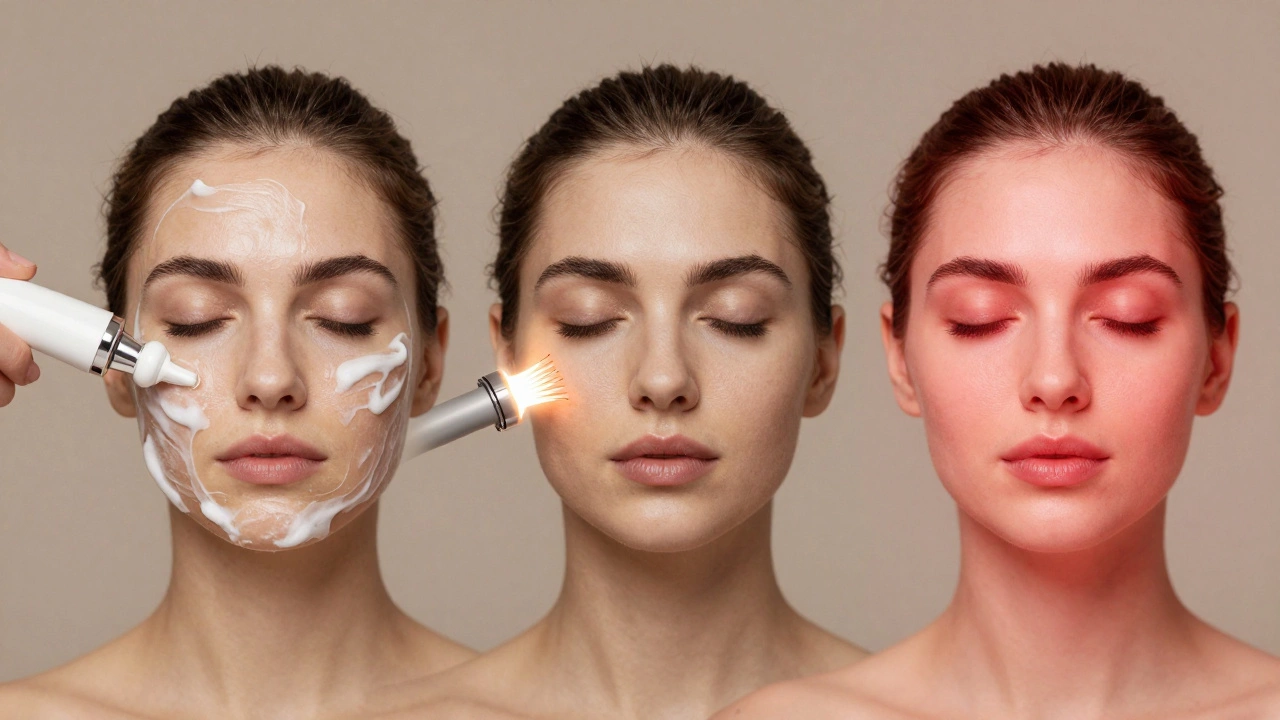
The most dramatic results come from stacking smart treatments. For example:
- Start with a Hydrafacial to prep your skin.
- Follow up with RF microneedling 2 weeks later to tighten.
- Then do monthly LED sessions to maintain glow and reduce inflammation.
This combo approach isn’t just popular-it’s backed by clinics in New Zealand and Australia. One Auckland dermatologist reported that patients using this 3-step routine saw 60% more collagen production over 6 months than those using just one treatment.
When to consider something stronger
If you’ve tried these treatments and still see sagging, deep creases, or volume loss in your cheeks, it might be time to talk to a specialist about injectables like fillers or neuromodulators (Botox). They’re not facial treatments per se, but they work alongside them. Fillers replace lost volume. Botox relaxes muscles that cause wrinkles. Used together, they can amplify results from non-invasive procedures.
But if you’re happy with your skin’s texture and tone-just want to look more refreshed-stick with non-surgical options. They’re safer, cheaper, and reversible.
Final thought: It’s not about looking 20 again
The goal isn’t to erase every line. It’s to look like the best version of yourself. Someone who’s well-rested, glowing, and naturally radiant. The best facial treatments don’t mask aging-they enhance your skin’s ability to heal itself. And that’s something no filter can replicate.
What facial treatment is best for someone in their 40s?
For someone in their 40s, RF microneedling and HIFU are top choices. These treatments target early sagging, fine lines, and loss of firmness. Many people start with 2-3 sessions of RF microneedling every 4-6 weeks, then add HIFU once a year for maintenance. Pairing this with monthly Hydrafacials keeps skin hydrated and bright. PRP can also be added if skin looks dull or uneven.
Can I do these treatments if I have sensitive skin?
Yes-but choose wisely. LED light therapy and Hydrafacial (with gentle serums) are very safe for sensitive skin. Avoid aggressive peels or high-heat RF if your skin reacts easily. Always ask for a patch test before any treatment. Many clinics now offer pre-treatment skin analysis using digital imaging to predict how your skin will respond.
How long do results last?
It depends on the treatment. HIFU and RF microneedling results typically last 12-18 months. PRP and Hydrafacial effects fade faster-around 3-6 months-so they’re best for ongoing maintenance. LED therapy needs regular sessions (once a week for 8 weeks, then monthly) to keep benefits. Your skin’s natural aging continues, so most people do touch-ups every 6-12 months.
Are these treatments safe for darker skin tones?
Absolutely. Modern devices like HIFU and RF microneedling are designed to work safely on all skin tones. Avoid treatments that use intense pulsed light (IPL) or certain lasers if you have deeper skin, as they can cause pigmentation changes. Always choose a provider experienced with diverse skin types. Ask to see before-and-after photos of clients with similar skin tones.
Do I need to stop using retinol before treatment?
Yes-if you’re getting microneedling, HIFU, or any procedure that breaks the skin barrier. Stop retinol 3-5 days before and wait 5-7 days after to let your skin heal. Retinol can make skin more sensitive and slow down healing. You can resume once redness and peeling are gone. Switch to a gentle moisturizer in the meantime.