Natural Skincare Routine Builder
Select the skin concerns you want to address below. We will recommend the best natural ingredients and build a simple 4-step routine for you.
Dry & Mature Skin
Needs deep hydration, barrier repair, and antioxidant protection against aging.
Marula Oil • SqualaneHyperpigmentation & Scars
Needs gentle cell turnover and vitamin A precursors to fade dark spots.
Rosehip Seed OilRedness & Sensitivity
Needs calming agents to reduce inflammation and histamine response.
Aloe Vera • Colloidal OatmealAcne & Congestion
Needs non-comedogenic oils and antibacterial humectants that don't clog pores.
Jojoba Oil • Manuka HoneyDull Texture
Needs gentle exfoliation to remove dead skin cells without micro-tears.
Lactic Acid • PapainDehydration (Tightness)
Needs powerful humectants to grab moisture from the air and hold it in skin.
Tremella Mushroom • GlycerinYou walk down the skincare aisle and see bottles promising miracles with names you can’t pronounce. But what if the answer was sitting in your kitchen or growing in a garden? The search for the best natural thing for skin isn’t just about avoiding chemicals; it’s about finding ingredients that actually work because they mimic what your body already knows how to use. There is no single magic bullet, but there are specific plant-based powerhouses that dermatologists and estheticians swear by.
Why Go Natural?
Your skin barrier is smart. It recognizes certain plant oils and extracts because their molecular structure is similar to the sebum (oil) your skin produces naturally. When you apply something synthetic, your skin might reject it or react poorly. When you apply something like Jojoba Oil, which is technically a liquid wax ester, your skin absorbs it easily without feeling greasy. This compatibility reduces irritation and helps maintain balance. Plus, many natural ingredients come packed with antioxidants that fight environmental damage from UV rays and pollution.
The Heavy Hitters: Oils That Transform Texture
If you have dry or aging skin, oils are often the missing link. But not all oils are created equal. You need non-comedogenic options-meaning they won’t clog pores.
| Ingredient | Best For | Key Benefit | How to Use |
|---|---|---|---|
| Rosehip Seed Oil | Hyperpigmentation & Scars | High in Vitamin A (natural retinol alternative) | Apply at night after cleansing |
| Squalane | All Skin Types | Mimics human sebum, lightweight hydration | Mix with moisturizer or use alone |
| Marula Oil | Dry & Mature Skin | Rich in antioxidants and fatty acids | Use as an overnight treatment |
Rosehip Seed Oil is a game-changer for dark spots. Unlike synthetic retinoids, which can cause peeling and redness, rosehip oil delivers gentle cell turnover thanks to its trans-retinoic acid content. I’ve seen clients with stubborn acne scars fade significantly after three months of consistent nightly application. Just remember: this oil oxidizes quickly. Store it in the fridge and buy small bottles.
Soothing Agents for Reactive Skin
If your face turns red at the drop of a hat, you need calming agents. Aloe Vera is the classic choice, but most drugstore versions are loaded with alcohol and fragrances that sting. Look for pure aloe gel or products where aloe is the first ingredient. It contains polysaccharides that help repair the skin barrier and reduce inflammation instantly.
Another underrated hero is Colloidal Oatmeal. Yes, oatmeal. It’s FDA-approved as a skin protectant. The avenanthramides in oats block histamine release, which stops itchiness and redness associated with eczema or rosacea. You can find it in creams, but honestly, a colloidal oatmeal bath is one of the most effective ways to calm a full-body flare-up.
Hydration Heroes Beyond Water
Drinking water is good for you, but it doesn’t hydrate your skin directly. Your skin needs humectants-ingredients that grab moisture from the air and hold it against your cells. Hyaluronic Acid is famous, but it’s often derived synthetically now. For a truly natural approach, look for Tremella Mushroom Extract. Studies suggest Tremella holds up to 500 times its weight in water, making it a potent natural humectant that penetrates deeper than standard hyaluronic acid due to smaller molecule size.
- Tremella Fuciformis: Deep hydration, plumping effect.
- Glycerin (Vegetable-derived): Reliable, cheap, and effective barrier support.
- Honey (Manuka): Humectant plus antibacterial properties for acne-prone skin.
Exfoliation Without the Scratch
Physical scrubs with apricot pits often cause micro-tears in the skin. Natural chemical exfoliants are far gentler. Lactic Acid, derived from fermented milk, is a type of Alpha Hydroxy Acid (AHA). It breaks down the glue holding dead skin cells together. Because lactic acid is also a humectant, it exfoliates while hydrating, so you don’t end up with tight, stripped skin.
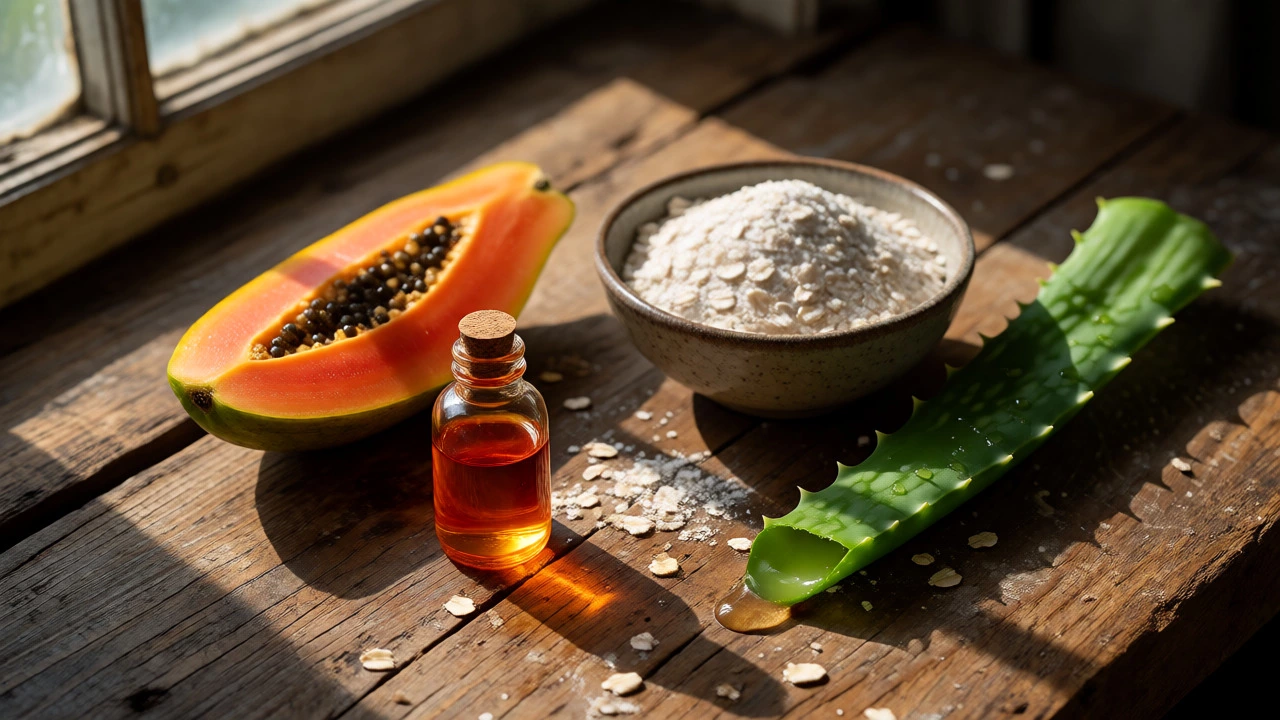
For sensitive skin, try Papain, an enzyme found in papaya. It digests dead skin proteins on the surface. It works slower than acids but is much less likely to cause stinging. If you’re new to exfoliating, start with a papaya enzyme mask once a week before moving to stronger acids.

How to Build a Simple Routine
You don’t need ten steps. In fact, fewer products mean fewer chances for irritation. Here is a basic framework using natural ingredients:
- Cleanse: Use a cream cleanser with oatmeal or honey. Avoid foaming washes that strip natural oils.
- Treat: Apply Rosehip oil (for texture/pigment) or Aloe Vera (for redness).
- Moisturize: Seal in the treatment with a balm containing Shea Butter or Squalane.
- Protect: Mineral sunscreen (Zinc Oxide) is the only non-negotiable step for anti-aging.
Consistency beats intensity. Applying rosehip oil every night will do more than using a high-strength acid scrub once a month.
Common Pitfalls with Natural Skincare
Just because it’s natural doesn’t mean it’s safe. Essential oils like lavender and lemon can be highly irritating, especially on sun-exposed skin. Lemon juice, often touted as a brightener, has a pH of 2, while your skin sits around 4.5-5.5. Putting straight lemon juice on your face disrupts your acid mantle, leading to breakouts and sensitivity.
Also, check for "greenwashing." Brands might put a leaf on the bottle and claim "organic," but the ingredient list shows water and parabens as the top components. Always read the label. If you can’t pronounce the second ingredient, it might not be as natural as advertised.
Frequently Asked Questions
Is coconut oil good for facial skin?
Coconut oil is highly comedogenic, meaning it clogs pores for many people. While it’s great for body moisturizing, it often causes breakouts on the face, especially for oily or acne-prone skin types. Jojoba or squalane are better facial alternatives.
Can natural ingredients replace retinol?
Not exactly, but they can mimic some effects. Bakuchiol, derived from the babchi plant, is clinically shown to reduce wrinkles similarly to retinol but with less irritation. Rosehip oil also contains natural vitamin A precursors, though at lower concentrations.
How long does it take to see results from natural skincare?
Natural ingredients often work slower than synthetic actives because they are gentler. Expect to see initial hydration benefits within a week, but significant changes in texture or pigmentation usually require 8 to 12 weeks of consistent use.
Is witch hazel bad for skin?
Traditional witch hazel contains tannins, which are astringent and can be drying or irritating for sensitive skin. Alcohol-free, distilled witch hazel is milder, but many modern derms prefer hydrating toners over traditional witch hazel for daily use.
Do I need sunscreen if I use natural oils?
Yes. Most natural oils offer minimal SPF protection (usually under SPF 6). They cannot prevent photoaging or skin cancer. Always apply a broad-spectrum mineral sunscreen during the day, even if you use antioxidant-rich oils at night.