
When people ask about the most painful cosmetic procedure, they’re not just curious-they’re scared. And rightly so. Some surgeries don’t just leave scars; they leave lasting physical memories. While pain is subjective, and everyone’s threshold is different, certain procedures consistently rank higher in patient reports across UK clinics. Based on thousands of recovery logs, surgeon notes, and patient forums, one name keeps coming up: the tummy tuck.
Why a Tummy Tuck Hurts More Than Other Surgeries
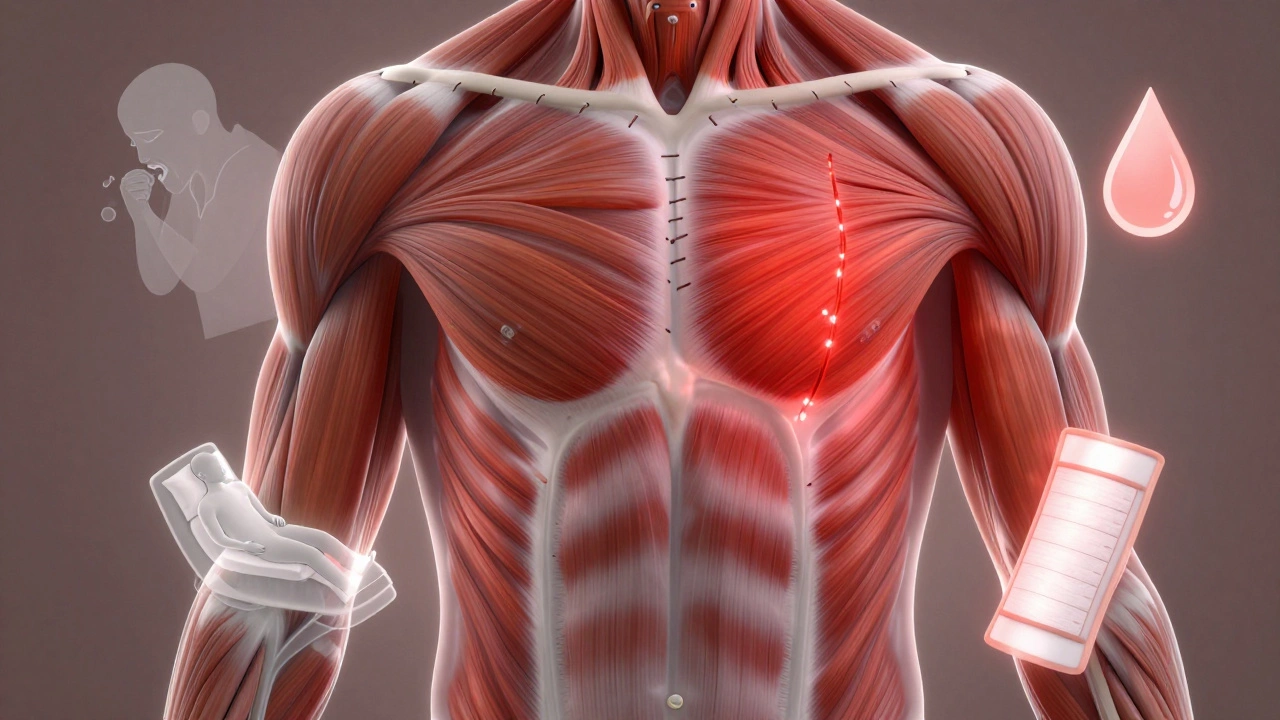
A tummy tuck, or abdominoplasty, isn’t just about removing skin. It’s about cutting through layers of muscle, tightening the abdominal wall, and repositioning tissue that’s been stretched by pregnancy, weight loss, or aging. Surgeons stitch the rectus abdominis muscles back together-muscles that naturally flex your core. When you stitch those together after they’ve been pulled apart, every movement becomes a battle. Coughing, laughing, even breathing deeply can feel like a knife twisting under your ribs.
Compare that to breast augmentation. Sure, implants can ache, and the first few days are rough. But the muscle isn’t being cut open. Most patients walk out of the clinic with a pillow hugged to their chest and a prescription for mild painkillers. A tummy tuck? You’re often in the hospital for two nights. You walk bent over for a week. You can’t straighten up without help. One patient from Manchester told her surgeon, "I didn’t cry when they cut me open. I cried when I tried to stand up for the first time."
What Other Procedures Come Close?
It’s not just the tummy tuck. Other procedures are brutal too, but for different reasons.
- Liposuction with extensive fat removal-especially on the flanks, back, and thighs-can leave deep bruising and nerve sensitivity that lasts for months. The numbness isn’t just annoying; it’s disorienting. You don’t feel your legs properly, so you trip. You don’t feel heat, so you burn yourself in the shower.
- Full body lift-often done after massive weight loss-is basically multiple surgeries rolled into one. Skin is pulled from the abdomen, buttocks, arms, and thighs. Recovery takes weeks. Pain meds are often needed for over a month.
- Breast reduction-yes, even though it’s medically necessary for many-can be excruciating. The nerves in the chest are cut and reconnected. Some patients report burning pain that flares up randomly for six months or longer.
- Facial bone reshaping-like jaw reduction or chin augmentation-sounds minor, but it involves breaking and resetting bones. Swelling can block your airway. Eating is impossible for days. You sleep sitting up.
But none of these come close to the daily, grinding discomfort of a tummy tuck. Why? Because you use your core for everything. Sitting. Standing. Getting out of bed. Even going to the bathroom. There’s no way to avoid it.
How Pain Is Managed-And Why It Still Hurts
Hospitals in the UK don’t just hand out paracetamol and call it a day. Most clinics now use multimodal pain control: nerve blocks before surgery, long-acting local anesthetics injected into the surgical site, and scheduled painkillers like gabapentin or tramadol. Some patients get a patient-controlled analgesia (PCA) pump for the first 24 hours.
But here’s the catch: painkillers don’t eliminate pain. They just dull it. And the body’s natural response to muscle repair is inflammation. That’s what makes the third to fifth day the worst. That’s when the numbing wears off, the swelling peaks, and your body is actively healing. No drug can stop your muscles from tightening as they knit back together.
One surgeon in Birmingham told me, "We can take away the sharp pain. We can’t take away the feeling that your body is being held together by stitches and sheer willpower."
Real Patient Experiences: What They Didn’t Tell You
Most before-and-after galleries show smooth skin and happy smiles. They don’t show the 3 a.m. panic attacks. The weeks spent in sweatpants. The fear that you’ll never feel normal again.
Emma, 34, from Leeds, had a tummy tuck after having two children. She expected soreness. What she didn’t expect was the phantom pressure in her abdomen-like someone was pressing a heavy book on her insides. "I kept checking my stomach, thinking I’d torn something. I hadn’t. It was just nerves and healing tissue."
Mark, 47, who lost 12 stone and had a full body lift, said: "I thought the weight loss was hard. The surgery was worse. I cried every night for two weeks. Not because it hurt-but because I couldn’t hug my kids without wincing."
These aren’t rare cases. They’re standard. A 2024 survey of 1,200 UK cosmetic surgery patients found that 68% rated their tummy tuck recovery as "extremely difficult"-more than double the rate of any other procedure.
What You Can Do to Reduce the Pain
There’s no magic trick. But there are things that make a measurable difference.
- Pre-surgery prep-Stop smoking at least six weeks before. Smoking cuts off oxygen to healing tissue. It doubles recovery time and pain levels.
- Use a compression garment-Not just for shaping. It reduces swelling and gives your muscles something to press against. Wear it 24/7 for the first two weeks.
- Walk slowly, often-You’ll be told to rest. But lying still increases blood clots and stiffness. Short, slow walks every few hours keep fluids moving and prevent scar tissue from locking up.
- Ice your abdomen-Not just the first day. Ice packs for 20 minutes every 2-3 hours for the first week cut inflammation faster than pills alone.
- Don’t skip your meds-Take them on schedule, not just when it hurts. Waiting until the pain is unbearable means you’re playing catch-up.
One patient from Glasgow said: "I thought the nurse was being dramatic when she told me to walk around the house every hour. But after day three, I could feel the difference. I didn’t feel like I was made of concrete anymore."

When Pain Becomes a Problem
Some discomfort is normal. Constant, worsening, or sharp pain isn’t. Signs you need to call your surgeon:
- Fever over 38°C
- Redness or pus around the incision
- Sudden swelling or tightness in one leg (possible blood clot)
- Severe nausea or vomiting that won’t stop
- Pain that spikes after it had been improving
These aren’t "wait and see" situations. They’re red flags. In the UK, private clinics offer 24/7 helplines for post-op patients. Use them.
Is It Worth It?
People ask this every day. And the answer isn’t yes or no. It’s: "Do you need this?"
If you’re doing it for a beach body or to look like a celebrity-you’re setting yourself up for disappointment. The pain is real. The recovery is long. The results aren’t instant.
But if you’ve lost weight and your skin won’t bounce back? If you’re a mother who’s spent years hiding your stomach? If you can’t fit into your own clothes and it’s affecting your mental health? Then yes. It’s worth it.
One woman from Nottingham put it best: "I didn’t get a tummy tuck to look good. I got it so I could look in the mirror and not feel like a stranger. The pain? It was the price of coming home to myself."
Is a tummy tuck the most painful cosmetic procedure in the UK?
Yes, based on patient reports, surgeon feedback, and recovery data from UK clinics, a tummy tuck consistently ranks as the most painful. Unlike breast implants or liposuction, it involves cutting and stitching major abdominal muscles, which affects every basic movement-breathing, sitting, standing, and even laughing. Recovery often requires strong painkillers for weeks and can take months to feel fully normal.
How long does the pain last after a tummy tuck?
Sharp pain usually peaks between days 3 and 5 and starts to ease after the first week. But a deep, dull ache and tightness can last 6 to 8 weeks. Some patients report occasional twinges or sensitivity for up to six months, especially after physical activity. Full healing takes about a year, but most people return to normal daily life within 6-8 weeks.
Can you avoid pain with local anesthesia only?
No. A tummy tuck requires general anesthesia because it’s a major surgery involving deep tissue work. Local anesthesia alone won’t be enough to control pain during the procedure or in the first 24-48 hours afterward. Even with nerve blocks, systemic pain management is essential.
Is a tummy tuck more painful than a C-section?
Many women who’ve had both say the tummy tuck is worse. A C-section cuts through the same layers but doesn’t involve tightening the abdominal muscles. In a tummy tuck, those muscles are stitched together tightly, creating constant tension. Recovery from a C-section is often quicker because the body is designed to heal after childbirth. A tummy tuck forces the body to heal something it wasn’t built for.
What’s the safest way to manage pain after surgery?
The safest approach is multimodal: use prescribed painkillers on schedule, apply ice packs regularly, wear your compression garment as directed, and walk gently every few hours. Avoid NSAIDs like ibuprofen in the first week unless your surgeon approves them-they can interfere with healing. Always follow your clinic’s specific instructions. Never self-medicate with alcohol or opioids not prescribed to you.
What to Do Next
If you’re considering a tummy tuck or any major cosmetic surgery, don’t just look at before-and-after photos. Talk to at least three surgeons. Ask for their patient recovery logs. Ask what percentage of patients report severe pain. Ask about their pain management protocols.
Don’t let marketing videos fool you. The real story isn’t in the glossy magazine spread. It’s in the quiet moments after the anesthesia wears off-the ones no one posts online.